
|
|
#1441
 04-29-2012, 02:18 PM
|
|||
|
|||

Quote:
Quote:
Hi 41Sqn_Banks, Please examine the following documentation showing Spitfire IIs of 611 Squadron using emergency boost in combat on 21 August 1940. This was very shortly after the Sptifire II first went operational in the RAF. 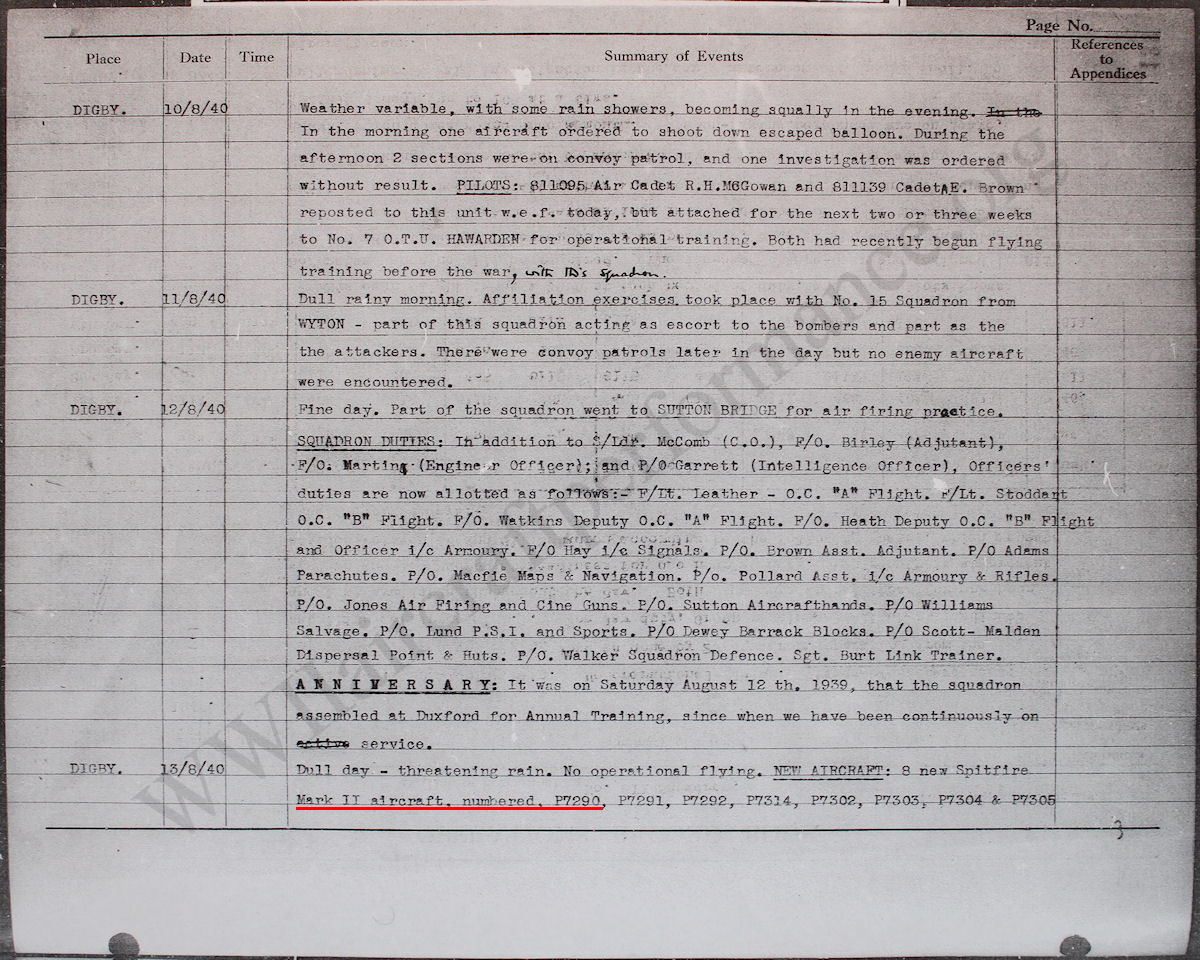 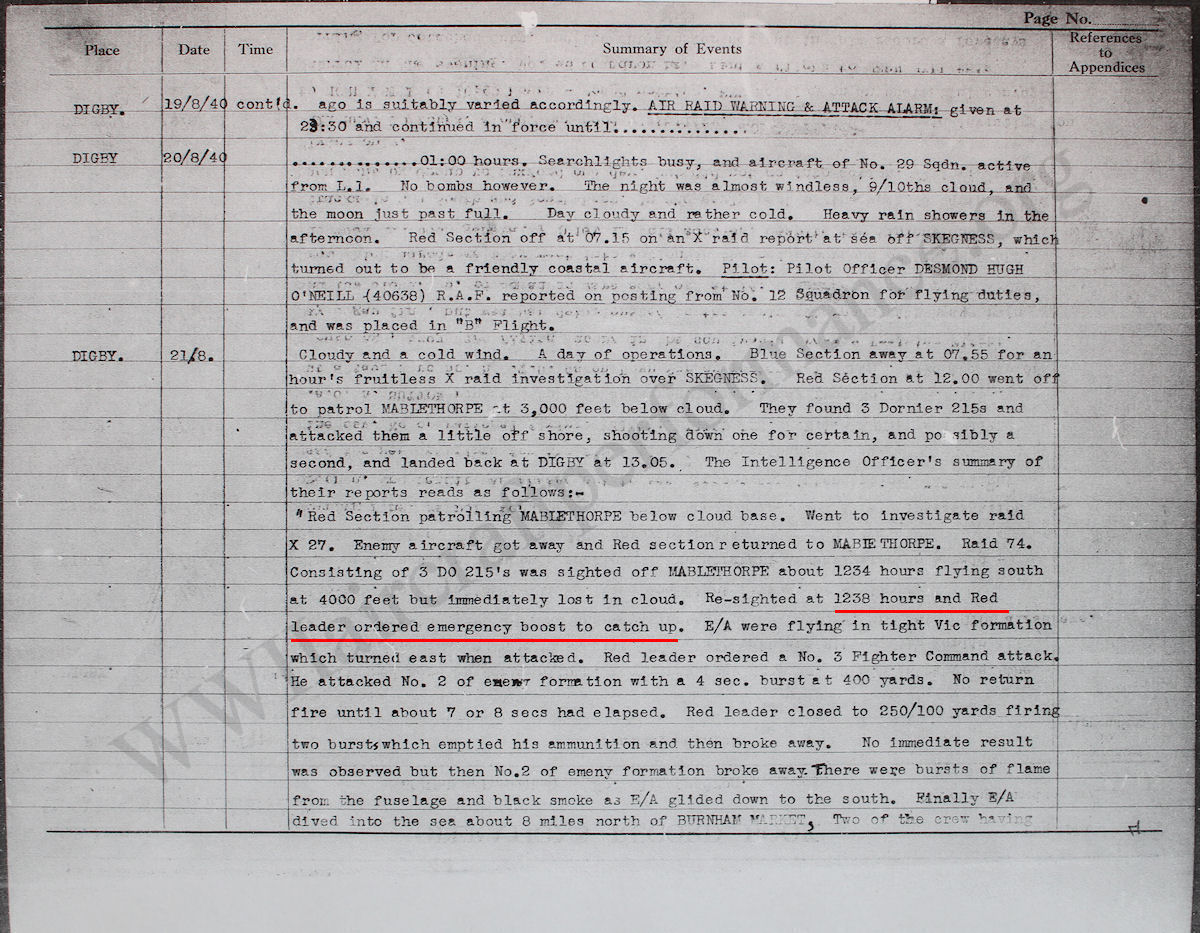 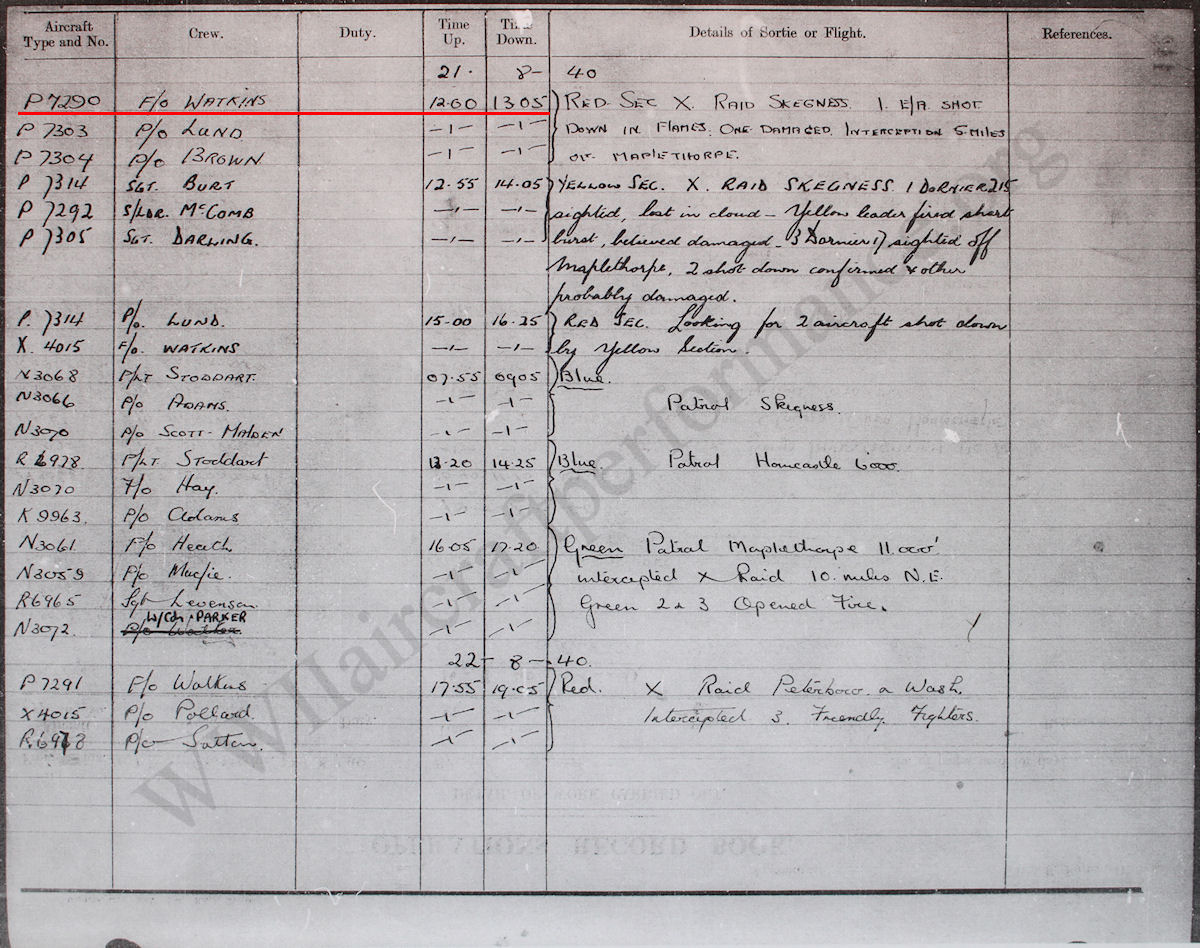 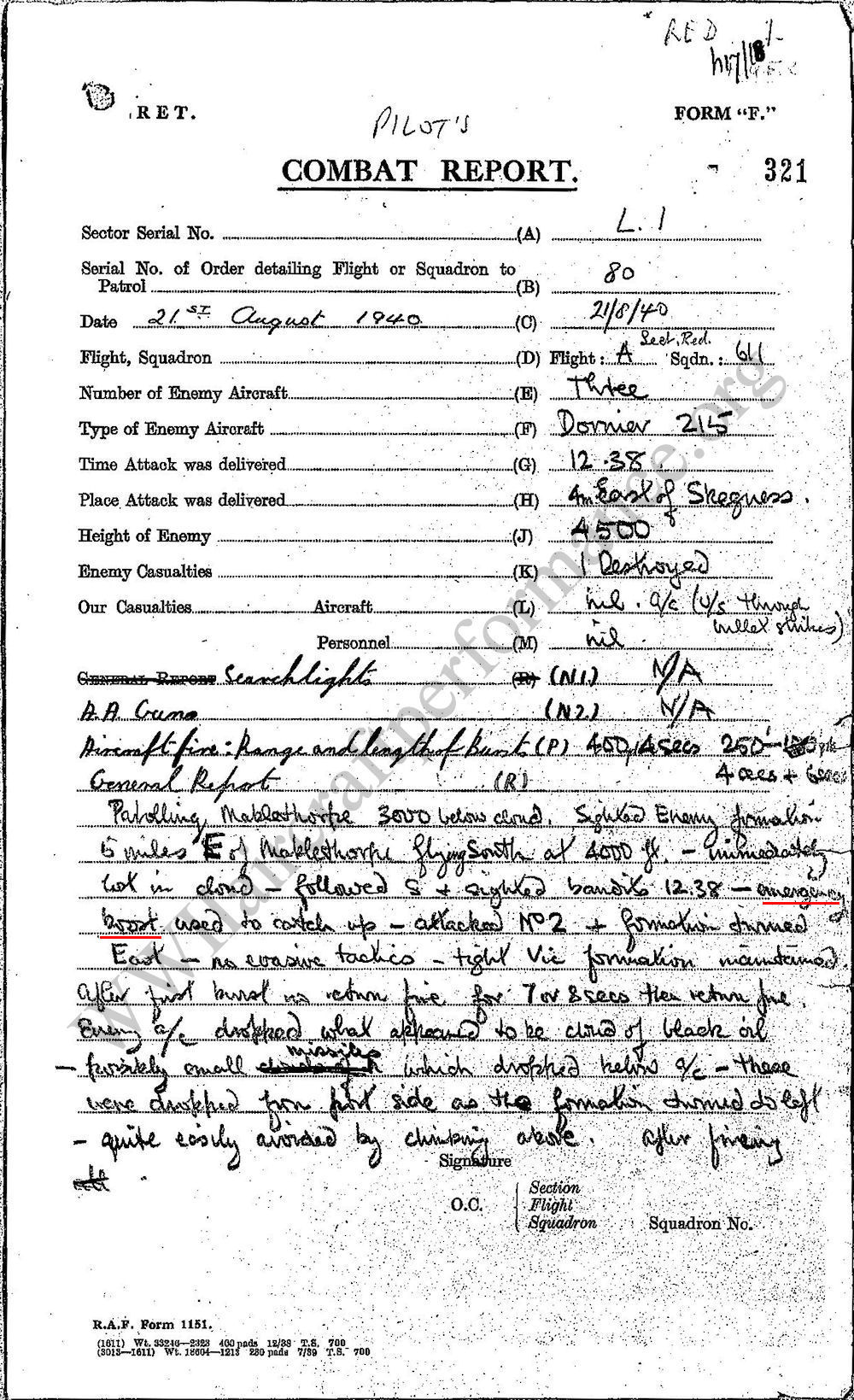 
|
|
#1442
04-29-2012, 02:37 PM
|
|||
|
|||
|
Quote:
However all I want to know if you still believe that the RAF only had approx 145 fighters with 100 octrane, that was the last time you gave me a figure. |
|
#1443
04-29-2012, 02:42 PM
|
|||
|
|||
|
Quote:
Thank you. That's a remarkable find and the proof I was looking for. |
|
#1444
04-29-2012, 03:30 PM
|
||||
|
||||
|
Another great find Lane, much thanks

|
|
#1445
04-30-2012, 04:39 AM
|
|||
|
|||

Quote:
It's interesting to note that there are nine Spitfire Is from the first 'K' and second 'N' production series; those delivered to 611 Sqn were: N3050 Ia 338 EA MIII FF 28-9-39 8MU 30-9-39 611S 1-3-40 N3051 Ia 340 EA MIII FF 29-9-39 8MU 2-10-39 611S 1-3-40 N3052 Ia 341 EA MIII FF 30-9-39 8MU 2-10-39 611S 1-3-40 N3053 Ia 342 EA MIII FF 1-10-39 24MU 5-10-39 611S 25-1-40 N3054 Ia 343 EA MIII FF 2-10-39 24MU 5-10-39 611S 25-1-40 N3055 Ia 344 EA MIII FF 3-10-39 fitt TR1133 24MU 5-10-39 611S 25-1-40 N3056 Ia 345 EA MIII FF 2-10-39 24MU 5-10-39 611S 25-1-40 N3057 Ia 346 EA MIII FF 3-10-39 24MU 4-10-39 611S 25-1-40 N3058 Ia 347 EA MIII FF 4-10-39 24MU 7-10-39 611S 25-1-40 N3059 Ia 348 EA MIII FF 5-10-39 27MU 7-10-39 611S 25-1-40 N3060 Ia 349 EA MIII FF 4-10-39 27MU 7-10-39 611S 25-1-40 N3061 Ia 350 EA MIII FF 6-10-39 27MU 10-10-39 611S 15-2-40 N3062 Ia 351 EA MIII FF 6-10-39 27MU 10-10-39 611S 15-2-40 N3063 Ia 353 EA MIII FF 7-10-39 27MU 10-10-39 611S 15-2-40 N3064 Ia 352 EA MIII FF 6-10-39 27MU 10-10-39 611S 15-2-40 N3065 Ia 354 EA MIII FF 8-10-39 611S 16-3-40 N3066 Ia 355 EA MIII FF 9-10-39 9MU 11-10-39 611S 16-3-40 N3070 Ia 359 EA MIII FF 11-10-39 6MU 16-10-39 54S 18-11-39 611S 16-12-39 N3072 Ia 361 EA MIII FF 12-10-39 6MU 12-10-39 54S 18-11-39 611S 18-12-39 N3099 Ia 370 EA MIII FF 17-10-39 8MU 19-10-39 611S 21-1-40 From http://www.spitfires.ukf.net/p002.htm When was 611 Sqn converted to 100 Octane fuel? Nine of them by 21/3/40... K9963 Ia 176 EA MII FF 4-5-39 602S 8-5-39 AST 27-11-39 611S 4-6-40 All of these Spitfires had engines built well before AP1590/J.2-W was issued, showing that the required modifications on early Merlin IIIs were well in hand on 611 Sqn. |
|
#1446
04-30-2012, 04:17 PM
|
|||
|
|||
|
Quote:
|
|
#1447
04-30-2012, 04:34 PM
|
||||
|
||||
|
Quote:
Yes and thanks for the update in bug 174 Banks. I'll be updating it for Artist to edit later. |
|
#1448
04-30-2012, 04:41 PM
|
|||
|
|||
|
Quote:
|
|
#1449
04-30-2012, 05:53 PM
|
|||
|
|||
|
Quote:
a) a shortage of fuel b) of 16 squadrons c) of which squadrons or bases d) why this isn't mentioned in any official document, book, history e) of the process in delivering the fuel f) when the rest of FC were transfered to 100 octane in fact anything Crumpp and Kururst claim |
|
#1450
04-30-2012, 09:05 PM
|
||||
|
||||
|
Glider,
Why don't you state exactly what it is in your mind that you think I am claiming, first? This is what I have said and is backed up by the facts: In July of 1940, 100 Octane fuel was not the standard fuel of Fighter Command. |
 |
|
|


 ) to find one that proofs the use of +12 in a Spitfire II or search in the National Archives for a similar doc like the one that clears the use of +12 emergency boost for Merlin XX.



 Linear Mode

