Fulqrum Publishing Home   |   Register   |   Today Posts   |   Members   |   UserCP   |   Calendar   |   Search   |   FAQ

Go Back   Official Fulqrum Publishing forum > Fulqrum Publishing > IL-2 Sturmovik > Daidalos Team discussions

Reply
 
Thread Tools Display Modes
  #1  
Old 07-28-2013, 01:44 PM
IceFire IceFire is offline
Approved Member
 
Join Date: Apr 2008
Posts: 1,879
Default

Quote:
Originally Posted by Gumpy View Post
Two bugs to report at least I think they are #1 the nasty tendency of auto piloted aircraft to throw their wings up into the vertical at random times then return to normal flight,I do not see normal AI aircraft executing this maneuver. #2 I'm seeing random flashes of light in the external view,almost like flash bulbs going off I don't know whether this has something to do with the new effects or not but,Ive never seen this in previous patch versions.
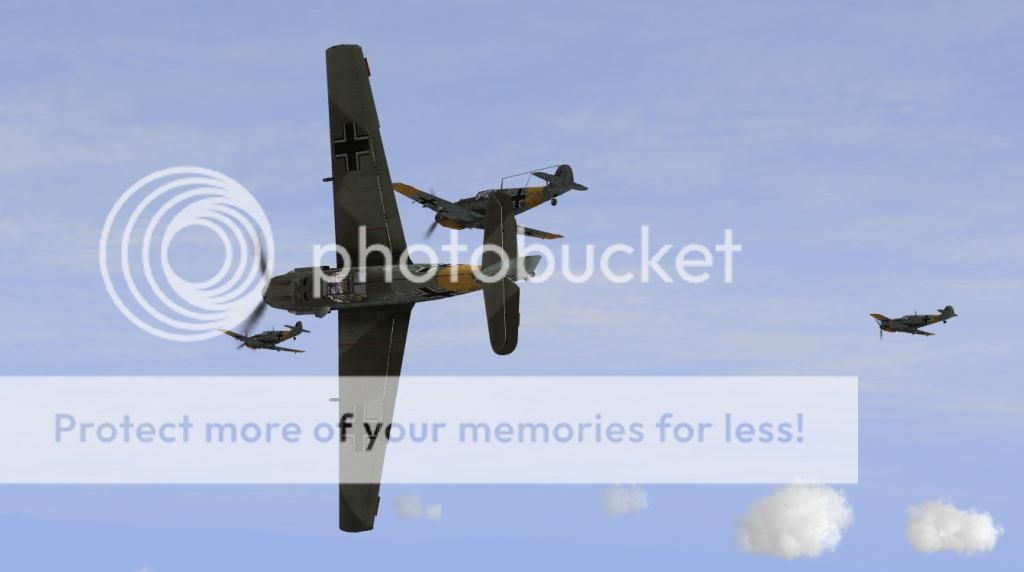
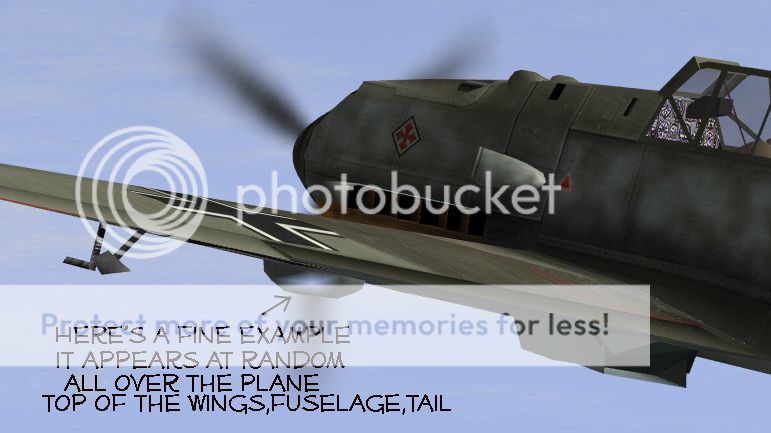
The wing "throwing" thing is them rolling to check their six and other areas hidden. It's perhaps a bit overstated by the AI but not an unusual sight in WWII. As the AI now have to deal with the sight lines of the cockpit just like human players they can now be surprised by a bounce that they couldn't see and thus this allows them to check.

__________________
Find my missions and much more at Mission4Today.com
Reply With Quote
  #2  
Old 07-28-2013, 01:56 PM
ElAurens's Avatar
ElAurens ElAurens is offline
Approved Member
 
Join Date: Oct 2007
Location: The Great Black Swamp of Ohio
Posts: 2,185
Default

I doubt you would have any aircraft fllying in formation doing 90 degree snap rolls to check six in real life.

As per usual, the AI continue their cheating ways, doing things no human pilot would or could do, all the while maintaining perfect trim under all conditions.

At least we do have an answer to a burning question no one ever asked, "What would a totally autonomous Skynet drone Bf 109 fly like"?

__________________


Personally speaking, the P-40 could contend on an equal footing with all the types of Messerschmitts, almost to the end of 1943.
~Nikolay Gerasimovitch Golodnikov
Reply With Quote
  #3  
Old 07-28-2013, 04:27 PM
Lagarto Lagarto is offline
Approved Member
 
Join Date: Apr 2011
Posts: 236
Default

I'm not sure if there's much difference between AI-controlled plane and autopilot-controlled plane but all autopilot-controlled planes lower flaps at speeds which normally make the flaps jam. It's easy to check - break autopilot when entering dogfight, the flaps are usually down and they get stuck solid (very irritating when you've been flying 10 minutes on autopilot and time compression to speed up the mission). Spitfires even lower half-flaps, which is something historically bogus and impossible - the Spitfire flaps had two positions: up or down.
Reply With Quote
  #4  
Old 07-29-2013, 10:14 AM
Pursuivant Pursuivant is offline
Approved Member
 
Join Date: May 2010
Posts: 1,439
Default

Quote:
Originally Posted by ElAurens View Post
I doubt you would have any aircraft fllying in formation doing 90 degree snap rolls to check six in real life.
+1

Although rolling, banking and turning is very realistic for a veteran pilot flying solo in a combat zone, it's not so realistic for planes flying in formation.

In formation, it was more typical for each pilot to be assigned a particular part of the sky to watch, or for the formation to slightly change direction at random intervals, or flying a weaving pattern, to check to below or to the rear.

In some cases, one plane was assigned to be a "weaver" or "tail end Charlie." The weaver flew slightly behind the formation and flew a weaving and banking pattern to check below and behind. The problem with this was that the "weaver" burned more fuel than the other planes in the flight, which could be a problem on long missions. He was also more vulnerable to attack than other planes in the formation.

When fighters flew close escort missions, they would often let the bomber gunners be their "eyes" to the rear and below. Alternately, they'd just break into combat pairs and randomly weave along their assigned course, both to check the sky and to help match speed with the slower bombers.

So, it would be more realistic to disable rolls and banks for planes in formation.

And, if TD wanted to do even more AI work, it would also be cool if they could implement some or all of these options.

1) Formations where each plane was detailed to watch a particular sector (and commands to make a plane in your formation watch a particular sector especially closely).

2) Formations where the formation weaves either randomly or at set intervals while maintaining a particular course. (And commands to tell your formation or a particular element of your formation to do this, or to stop doing it.)

3) Formations where the last plane in the flight acts as a "weaver", acting as described above to check below and to the rear of the formation. (And commands to tell one or more planes in your formation to drop back and weave, or to stop doing so.)

4) Commands to tell your formation (or parts of it) to orbit either a location on the ground or another formation of planes.

5) Commands to tell certain planes to take station ahead, behind, above, below or to the side of another formation of planes.

Commands 4 & 5, combined with an order to weave could allow the player to assign a "tail end charlie" when the default formation doesn't allow it, or could be used to arrange close escort fighters around a bomber formation.
Reply With Quote
  #5  
Old 07-29-2013, 07:05 PM
Juri_JS Juri_JS is offline
Approved Member
 
Join Date: Oct 2009
Posts: 154
Default

Here is something that wasn't fixed in 4.12.1.
A6M5c and A6M7 equipped with Type3 air-to-air rockets don't attack other planes.
Reply With Quote
Reply

Thread Tools
Display Modes

Posting Rules
You may not post new threads
You may not post replies
You may not post attachments
You may not edit your posts

BB code is On
Smilies are On
[IMG] code is On
HTML code is Off

Forum Jump


All times are GMT. The time now is 07:55 AM.


Powered by vBulletin® Version 3.8.4
Copyright ©2000 - 2026, Jelsoft Enterprises Ltd.
Copyright © 2007 Fulqrum Publishing. All rights reserved.