
|
|
|||||||
| IL-2 Sturmovik: Cliffs of Dover Latest instalment in the acclaimed IL-2 Sturmovik series from award-winning developer Maddox Games. |
 |
|
|
Thread Tools | Display Modes |
|
|
|
#1
 10-11-2012, 04:46 PM
|
|||
|
|||

Quote:
DB 601A, French109 1.3ata = 570 km/h @ 5000 m - 5500 m - Closed Radiators http://kurfurst.org/Performance_test...formanceT.html Regards 
|
|
#2
10-12-2012, 09:04 AM
|
||||
|
||||
|
Quote:
I'll try to finish the 109 tests this weekend. It won't be "max speed tests" but a test at 2400 / 1.3 and 2400 / 1.35 to compare with historical charts and avoids arguments about what max speed power settings should be.
__________________
klem 56 Squadron RAF "Firebirds" http://firebirds.2ndtaf.org.uk/  ASUS Sabertooth X58 /i7 950 @ 4GHz / 6Gb DDR3 1600 CAS8 / EVGA GTX570 GPU 1.28Gb superclocked / Crucial 128Gb SSD SATA III 6Gb/s, 355Mb-215Mb Read-Write / 850W PSU Windows 7 64 bit Home Premium / Samsung 22" 226BW @ 1680 x 1050 / TrackIR4 with TrackIR5 software / Saitek X52 Pro & Rudders
|
|
#3
10-12-2012, 09:19 AM
|
|||
|
|||
|
BTW how do you measure TAS?
__________________
Il-2Bugtracker: Feature #200: Missing 100 octane subtypes of Bf 109E and Bf 110C http://www.il2bugtracker.com/issues/200 Il-2Bugtracker: Bug #415: Spitfire Mk I, Ia, and Mk II: Stability and Control http://www.il2bugtracker.com/issues/415 Kurfürst - Your resource site on Bf 109 performance! http://kurfurst.org 
|
|
#4
10-12-2012, 08:50 PM
|
||||
|
||||
|
Quote:
One is to take the CoD C# Parameter Z_VelocityTAS for TAS which I have been doing because I was finding the calculated value to be fair bit off the game parameter (which I have now fixed and is very close to game paramater now, see second method below). The second method is to calculate from the IAS (I_VelocityIAS), converting through Pressure Altitude, i.e. adjusted from actual baro pressure to Standard Day Pressure and then to Density Altitude which adjusts it again taking into account actual Temperature vs Standard Day Temp. Formulas are here: http://williams.best.vwh.net/avform.htm#Altimetry See "Relationship of pressure and indicated altitude:" for Pressure Altitude and "Relationship of pressure and density altitude:" for Density Altitude. My full method is here: http://forum.1cpublishing.eu/showpos...6&postcount=10 .....although I have tweaked the .cs file since then simply to correct the calculated TAS. I'll try to replace the zip file over the weekend. I'm currently working on a Bf109 set. Beware of the indicated airspeed C#parameter Z_VelocityIAS as it seems to be wrong and far too close to Z_VelocityTAS even at altitude.
__________________
klem 56 Squadron RAF "Firebirds" http://firebirds.2ndtaf.org.uk/ ASUS Sabertooth X58 /i7 950 @ 4GHz / 6Gb DDR3 1600 CAS8 / EVGA GTX570 GPU 1.28Gb superclocked / Crucial 128Gb SSD SATA III 6Gb/s, 355Mb-215Mb Read-Write / 850W PSU Windows 7 64 bit Home Premium / Samsung 22" 226BW @ 1680 x 1050 / TrackIR4 with TrackIR5 software / Saitek X52 Pro & Rudders
|
|
#5
10-12-2012, 09:58 AM
|
|||
|
|||
|
from "Radinger, Schick, Otto: Messerschmitt Bf109" Aviatik Verlag
V-15 BF-109, W.Nr. 1773; D-IPHR Engine DB-601A, W.Nr. 140 with one-stage compressor [4km full pressure] (einstufiger Lader, 4km Volldruckhöhe), 1100 PS VDM-Verstellschraube with 3,10m diameter 400l fuel tank armory: 2MG 17 in fuselage, 2MG 17 in wing Half hour flight on 4. Feb. 1938 in Augsburg and tested at the same day in Rechlin. In April back in Augsburg and used as prototype for Bf-109 T-series wing tests. interesting is that that both prototypes suffered power loss in full pressure height. V15: 146PS in 3900m height tested on 6. 7. and 9 May 1938 V15a: 200PS 26. April 1938 How this problem was solved is unknown to the authors since there is no report. EDIT: By the way L.Dv.556/3 says for E-1, E-3 height / Max. Speed 0 km / 460 km/h 1 km / 480 km/h 2 km / 500 km/h 3 km/ 520 km/h 4 km / 540 km/h 5 km / 555 km/h 6 km / 555 km/h 7 km / 550 km/h Max. allowed horizontal speed at SL 485 km/h Engine: DB-601A (full pressure height 4 km) at SL: 1min. power 1175 PS at 2500 rev/min 5min. power 1015 PS at 2400 rev/min 30min power 950 PS at 2300 rev/min continuous power 860 PS at 2200 rev/min power in height: 5min. power in 3,7km 1100 PS at 2400 rpm continuous power in 4,1km 1050 PS at 2400 rpm continuous power in 4,5km 1000 PS at 2400 rpm economic continuous power at 3,85km 975 at 2250 rpm VDM-Verstellschraube 3,10m diameter Last edited by Kodoss; 10-12-2012 at 10:41 AM.
|
|
#6
10-12-2012, 06:02 PM
|
|||
|
|||
|
Quote:
Thanks for the information, your books quotes for horizontal speed of E1 and E3 types agree with this test approx. time period of E-1/E-3 production, as per this table: 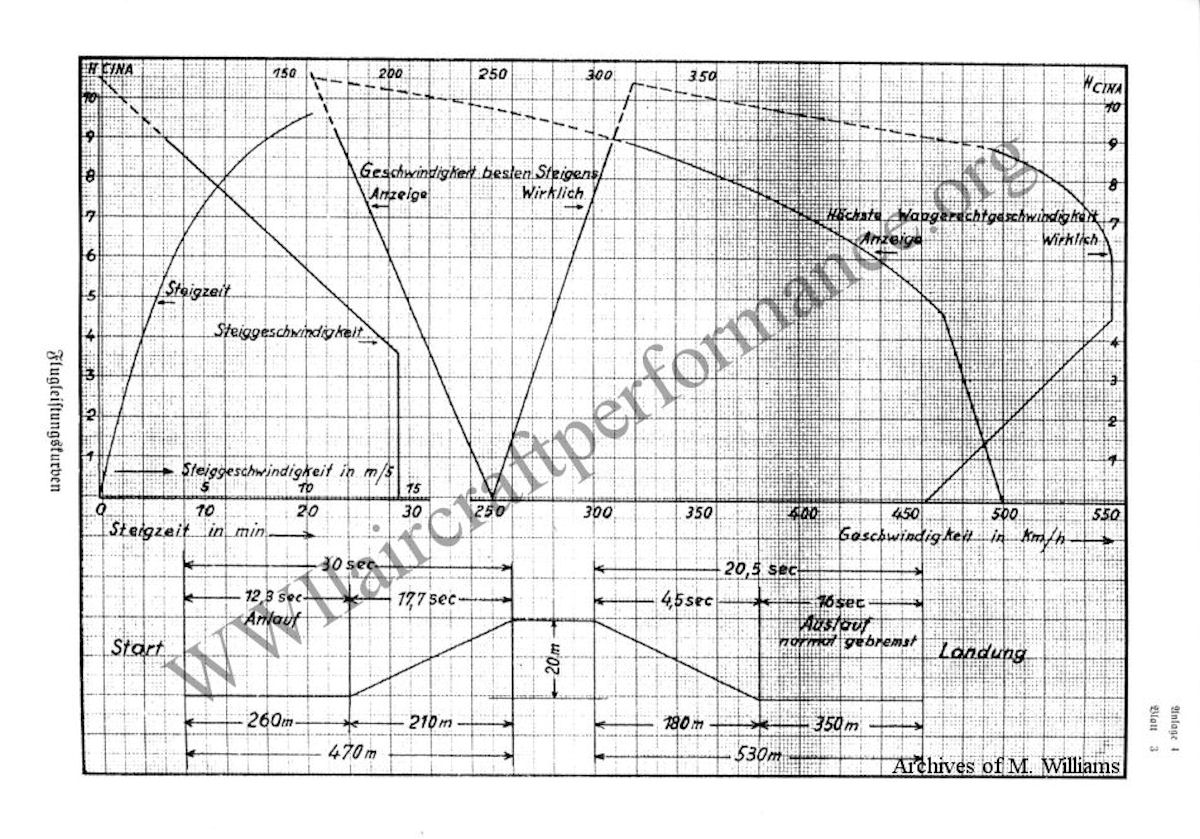 I am not convinced there were two aircraft, each would typically be numbered differently if the system used in the numbering of all the other prototypes was followed. It seems more likely, the designation 'a' might mean the same plane with a different engine installation or some other equipment. The fact V15 was being used as a test bed for a potential 109T model in April at the same time as Kurfurst's test, is a likely indicator of why its performance envelope in that test was completely different than a standard E model and why speeds were so high at sea level. Carrier borne fighter aircraft require more performance at lower altitudes, the final 109T was built with the DB601N engine using higher octane fuel, not with the DB601A using the standard 87 octane variety. With the note that the engine was allowed to rev to 2500 rpm, not standard in the DB601 in this time period, see table below, it may be there was an attempt to gain power at takeoff and at lower altitudes. Whether or not V15 was being tested with higher octane fuel is a question which needs to be answered. 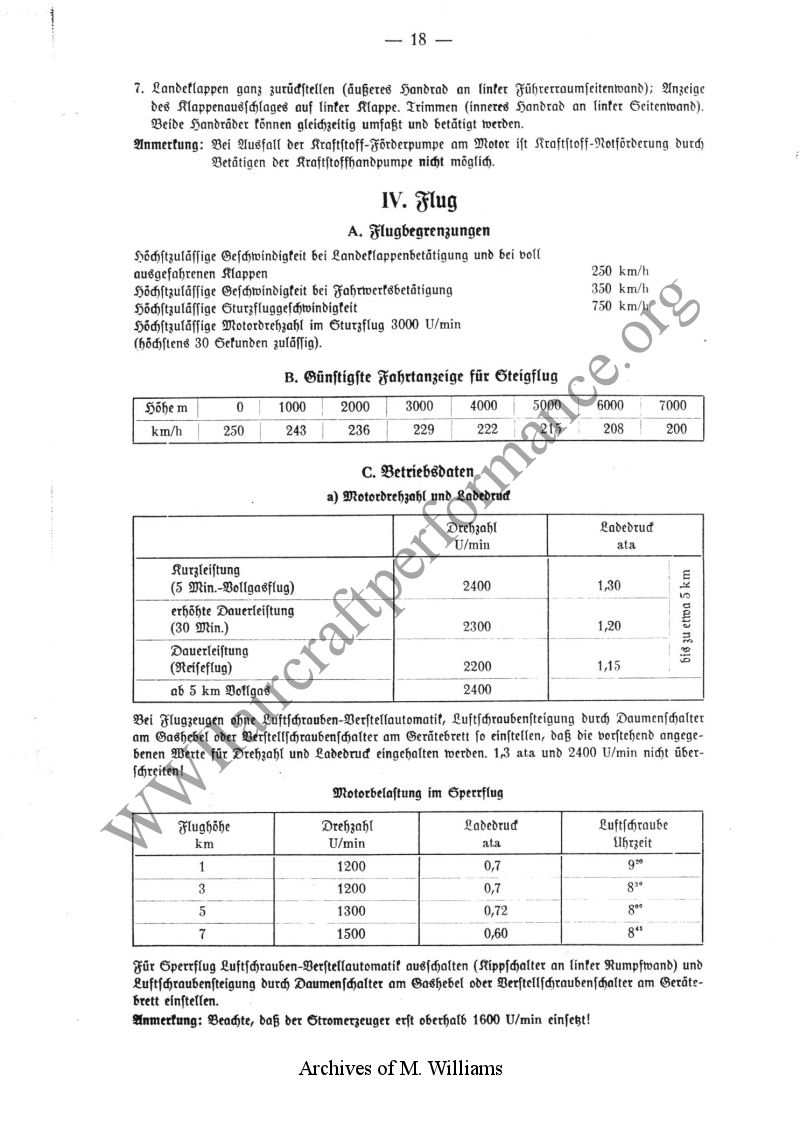 In any case, the fact seems to be that V15's test was not representative of a standard E-1. Last edited by *Buzzsaw*; 10-12-2012 at 06:10 PM.
|
|
#7
10-11-2012, 08:42 AM
|
||||
|
||||
|
Quote:
Maybe you are right and the numerous engine overhauls would cause for majority of the later BoB Emils flying with Aas despite the lower overall number of 601 made (e.g. one airframe could have several engines installed during its lifespan). What we have now is a DB 601 with A-1 FTH and Aa rating, that is certainly incorrect.
__________________
Bobika.
|
|
| Thread Tools | |
| Display Modes | |
|
|


 Hybrid Mode
