
|
|
|||||||
| FM/DM threads Everything about FM/DM in CoD |
 |
|
|
Thread Tools | Display Modes |
|
|
|
#1
 05-23-2012, 03:19 AM
|
||||
|
||||

Quote:
Some more supporting data: Prometheans in the Lab: Chemistry and the Making of the Modern World, McGrayne: "Britain's petroleum secretary Geoffrey Lloyd said later, "we wouldn't have won the Battle of Britain without 100 octane..." "p103. Two Historians in Technology and War, Howard and Guilmartin: Quote:
Air Warfare: an International Encyclopaedia: A-L, Walter J. Boyne Quote:
The Most Dangerous Enemy: An Illustrated History of the Battle of Britain By Stephen Bungay p56, 59 and another: Sydney Camm and the Hurricane, Fozard, Foreword by Sir Peter G. Masefield: Quote:
http://www.telegraph.co.uk/news/obit...Masefield.html Why would Masefield say that "...without... "100 octane fuel" - there would have been no prospect of success"? Last edited by Seadog; 05-23-2012 at 05:43 AM. |
|
#2
05-23-2012, 04:45 AM
|
|||
|
|||
|
Crumpp and Kurfurst go to college...
and present their history prof with a thesis:
"RAF FC used 87 octane and 100 octane fuel during the Battle of Britain" "An excellent thesis" says the prof, at the start of the term, "if you can prove it you will have altered our understanding of one of the most crucial battles in modern history." A few months later they are called into the prof's office: "How are you two getting along with your paper? I expected something from you by now...but I'll let you have a few more days. By the way, what proof have you got? Remember, the term is almost over, and I expected a finished paper by now." Crumpp and Kurfurst pull out a 1/2 dozen pages and place them on the prof's desk: "Well we have some papers dating from 1938 and we think that some aircraft manuals state that 87 octane was required." "Hmmm..." says the prof, staring at the meagre number of pages: "You mean to say that's all you've got? I think you need to go the library, the archives, and the even the web, and dig up some solid evidence for 87 octane use during the actual battle...after all there's numerous sources that state that 100 octane fuel was used during the battle. You are now making an 'extraordinary claim' which is all well and good but as you well know, extraordinary claims require extraordinary proof, and I'm sorry gentleman, but I don't see any such proof in the rather sparse data that you've presented. Crumpp and Kurfurst look downcast and stare at their feet: "We have looked high and low and this is all we can come up with." "Oh my" says the prof... he pauses for a few moments, moves back to marking papers and then glances up and states: "No problem gentlemen; you have a few more days...just make sure that your paper states that you conclude that your thesis is false, based upon the lack of any direct evidence for 87 octane fuel use, and the mass of contradictory evidence stating that 100 octane fuel was in universal use. Good day" Last edited by Seadog; 05-23-2012 at 04:48 AM. |
|
#3
05-23-2012, 09:18 AM
|
|||
|
|||
|
Crumpp and Kurfurst go to college...
Quote:
 Anyone who has had to write a paper knows that they have to provide evidence for their thesis, and to date none has been forthcoming, for Crumpp and Kurfurst's thesis of mixed 87 octane and 100 octane fuel use by RAF FC during the BofB. |
|
#4
05-23-2012, 06:28 AM
|
||||
|
||||
|
Quote:
 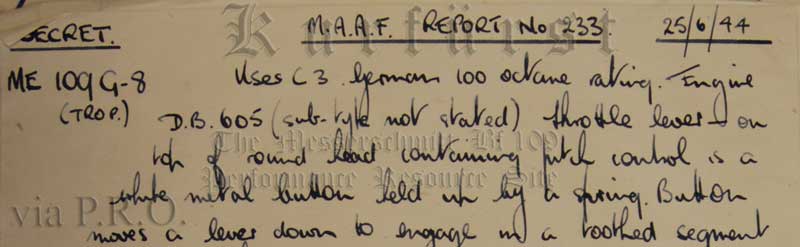 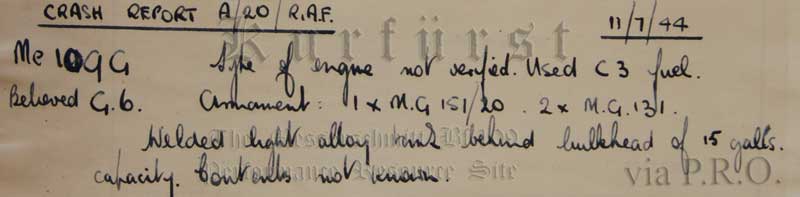 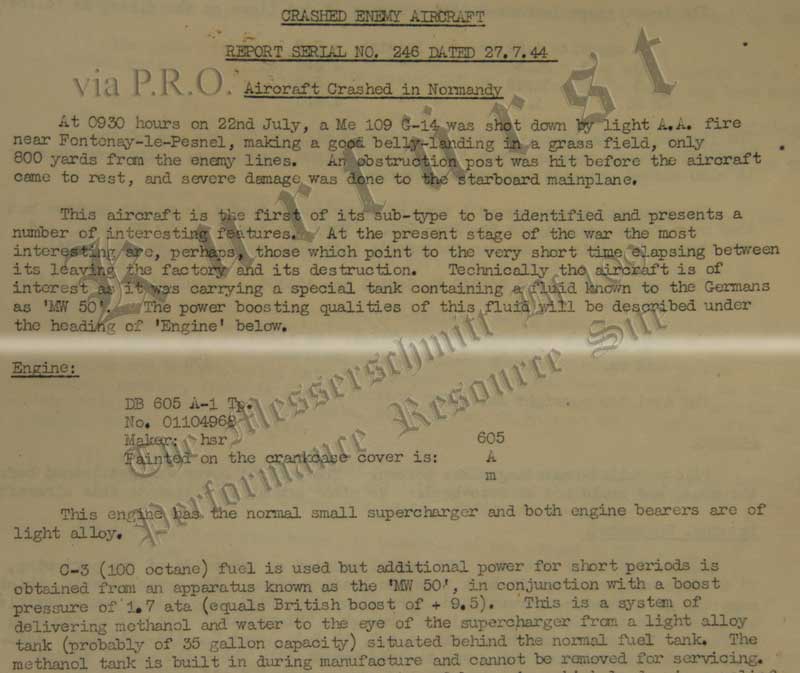 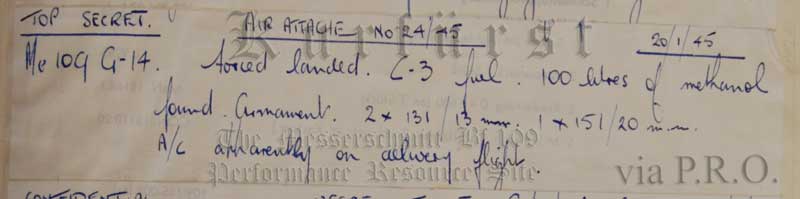 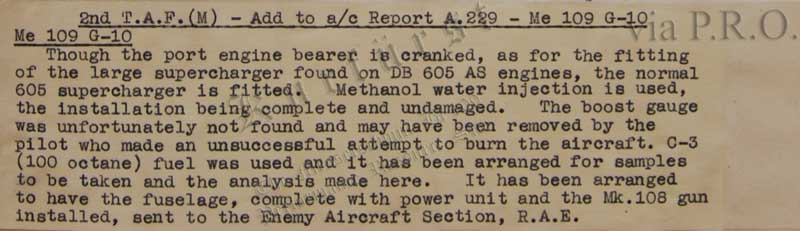 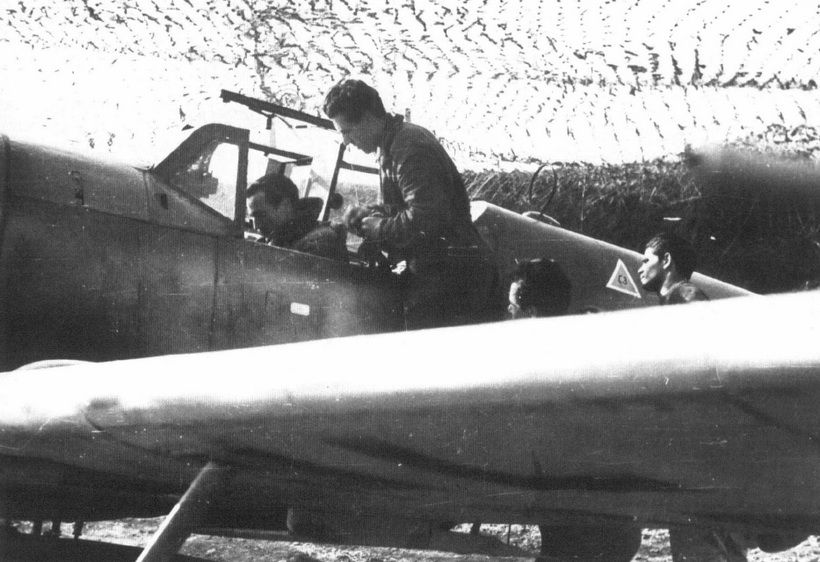 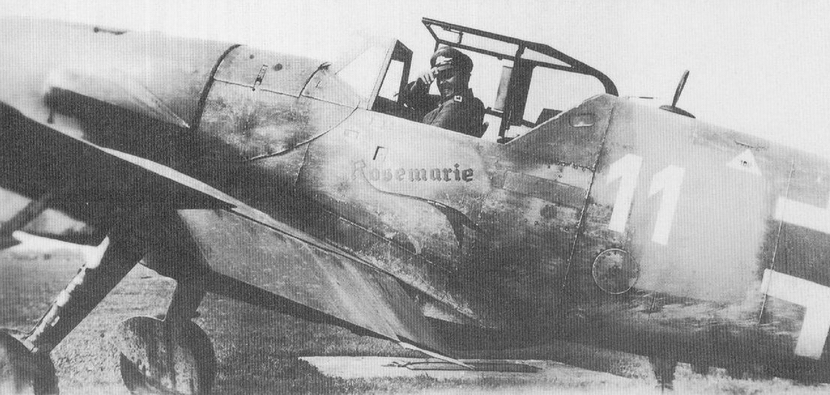 Quote:
Air Warfare: an International Encyclopaedia: A-L, Walter J. Boyne Quote:
 Sydney Camm and the Hurricane, Fozard, Foreword by Sir Peter G. Masefield: Quote:
__________________
Il-2Bugtracker: Feature #200: Missing 100 octane subtypes of Bf 109E and Bf 110C http://www.il2bugtracker.com/issues/200 Il-2Bugtracker: Bug #415: Spitfire Mk I, Ia, and Mk II: Stability and Control http://www.il2bugtracker.com/issues/415 Kurfürst - Your resource site on Bf 109 performance! http://kurfurst.org 
|
|
#5
05-23-2012, 07:58 AM
|
|||
|
|||
|
Quote:
 Contemporary 1940 documents clearly establish that more than adequate supplies of 100 octane fuel were in stock and under production during the battle. If you have no evidence of RAF FC use of 87 octane, why don't you simply state that? Contemporary 1940 documents clearly establish that more than adequate supplies of 100 octane fuel were in stock and under production during the battle. If you have no evidence of RAF FC use of 87 octane, why don't you simply state that?German use or not, as the case may be, of hundred octane fuel, has no bearing on RAF FC use of said fuel during the BofB. Again, you have no evidence for RAF FC use of 87 octane fuel, yet there is abundant sources and direct evidence for the production, and use of 100 octane fuel by the entire RAF FC from July 10 1940 onward, while no evidence for even a single RAF FC frontline Hurricane/Spitfire combat sortie during the BofB, has ever been produced, despite the logistical nightmare that this would have created for RAF FC, not to mention the morale effect of having only select units using 100 octane fuel, when every fighter in RAF FC was capable of using it. RAF FC was tasked with destroying Luftwaffe bombers, and it did this in large enough numbers to win the battle, and achieve an overall kill ratio superiority during the BofB. The Luftwaffe lost the battle and it's Commander in chief, went on to accuse his own fighter pilots of cowardice; why? BTW, how many French Channel based Me109s were using 100 octane on July 10 1940? On Aug 1 1940? On Sept 1 1940? On Oct 1 1940? How are 1944 documents relevant to this discussion? Last edited by Seadog; 05-23-2012 at 08:54 AM. |
|
#6
05-23-2012, 08:48 AM
|
||||
|
||||
|
When i read this, or one of the countless other, 100-octane threads i see two sides:
a) FC used only 100 octane through the BoB b) FC was in the conversion from 87 octane to 100 octane and used both fuels where a) has lots of evidence that 100 octane was used but no proof that 87 octane was not used b) has evidence that 87 octane was used in the RAF and possibly in the FC but can not prove the use by the FC my resume would be a) tends to see the world in black or white, which never works this way in real life b) says that there is always a grey area, which should be taken in account, a practical approach, imo.
__________________
Win 7/64 Ult.; Phenom II X6 1100T; ASUS Crosshair IV; 16 GB DDR3/1600 Corsair; ASUS EAH6950/2GB; Logitech G940 & the usual suspects  |
|
#7
05-23-2012, 09:08 AM
|
|||
|
|||
|
Quote:
If no 87 octane was used then we expect to see no evidence for its use, and indeed there is no such evidence. British Piston Aeroengines and their aircraft: "...As a result of satisfactory trials in March 1940, it was decided to switch Fighter Command to 100 Octane fuel, followed by Bombed Command about year later..." p313 |
|
#8
05-23-2012, 09:17 AM
|
|||
|
|||
|
Quote:
By your analogy (one side lots of evidence, the other side not so much - but a more practical approach) anything can be proven - which is precisely how the various conspiracy theories about JFK's assassination, or whether or not Apollo reached the moon work. Just produce enough "evidence" to leave a little doubt, and throw lots of smoke and noise around to provide distraction and make the few facts thrown in seem far more important than they really are. I guess it works because people are taken in by this ahistorical approach to historical research all the time. |
|
#9
05-23-2012, 09:31 AM
|
||||
|
||||
|
Quote:
1. evidence is no proof 2. to preclude a possibility, however remote, without proof is unscientific
__________________
Win 7/64 Ult.; Phenom II X6 1100T; ASUS Crosshair IV; 16 GB DDR3/1600 Corsair; ASUS EAH6950/2GB; Logitech G940 & the usual suspects |
|
#10
05-23-2012, 09:46 AM
|
|||
|
|||
|
Quote:
If that's true, I can prove the moon is made out of cheese; the evidence is lacking because when the Apollo astronauts landed with samples of moon cheese they were immediately turned into toasted cheese sandwiches and eaten by hungry NASA staff, and the reports were then fudged and rocks were substituted. Now, you can provide evidence in the form of moon rocks and scientific reports and I can dismiss the evidence because I didn't actually travel to the moon with the astronauts and watch them pick up the rocks, nor did I see the scientific reports being processed. So the fact is the moon is made out of cheese and my belief in that is scientific because I am not precluding the possibility, however remote it may seem; in fact there's even a web page showing that the moon is made of cheese and that's evidence in itself. It's a brilliant concept because I can prove anything I like! 
Last edited by NZtyphoon; 05-23-2012 at 10:13 AM. |
|
| Thread Tools | |
| Display Modes | |
|
|





 Hybrid Mode
