![]() |
|
|||||||
| FM/DM threads Everything about FM/DM in CoD |
![]() |
|
|
Thread Tools | Display Modes |
|
|
|
#1
|
|||
|
|||
|
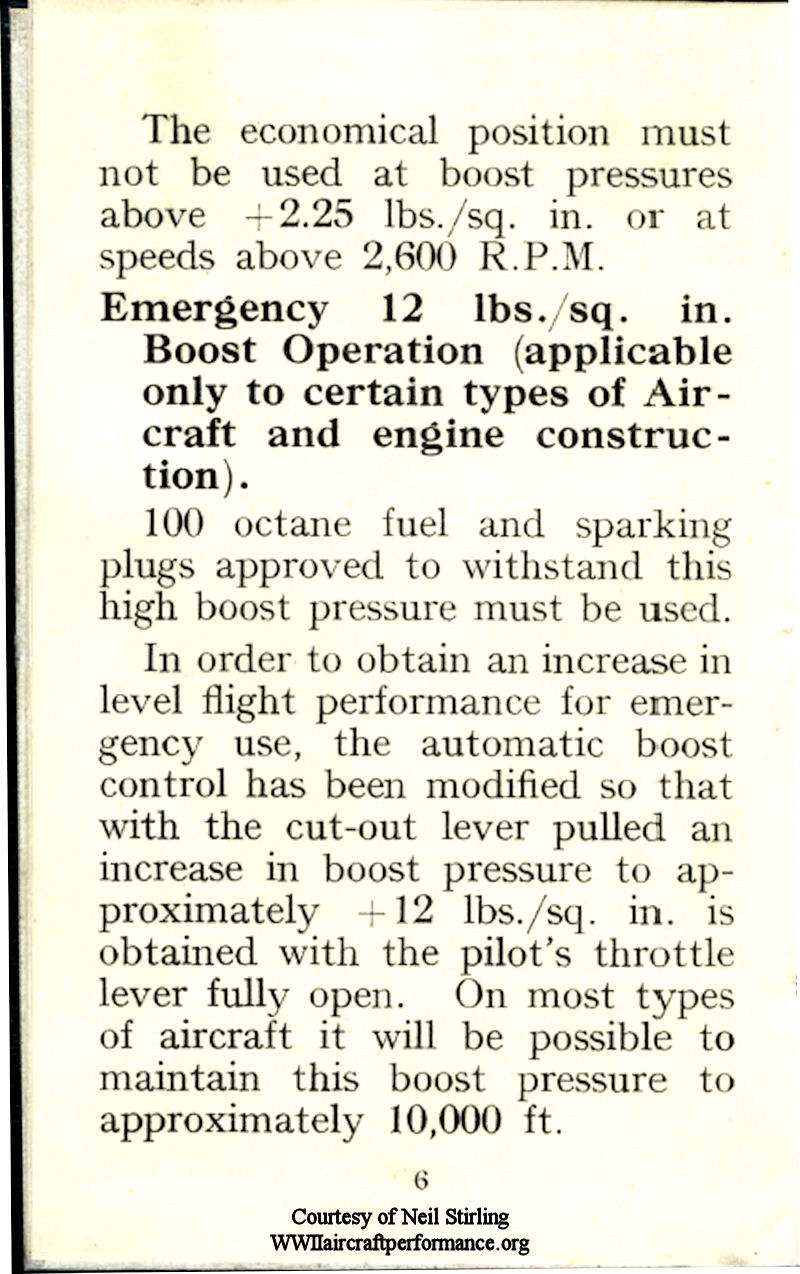
When using emergency boost pressures in excess of 6.25 lbs/sq.in. 100 octane was required, therefore if a pilot recorded use of emergency power it necessarily follows that the aircraft was fueled with 100 octane fuel.
Operational Notes for Pilots on Merlin II and III, January 1939 (thanks 41Sqn_Banks) ![]() Pilot's Notes, Merlin II, III and IV, 4th Edition, April 1940, page 6. ![]() Spitfires were cleared for use of 100 octane fuel for improved take-off in September 1938 just a month after the introduction of the type into service. ![]() By 12 December 1939 100 octane fuel was approved for Spitfires, Hurricanes and Defiants. 100 Octane Fuel - Issue of. |

|
#2
|
|||
|
|||
|
seems like all you needed was a new set of plugs and a ground test to check smooth running when using the 100 too...
Sounds contradictory to the more doom-and-gloom scenarios presented by some thread participants... |
|
#3
|
||||
|
||||
|
Quote:
What does it have to do with the fact the system was used before 100 Octane was an issue? Quote:
We also have Operating Note instructions in the General Operating Notes that allow for its use. I bet Dowding did see a large increase in motor failures. |
|
#4
|
||||
|
||||
|
Quote:
100 Octane has a higher lead content so changing plugs to one that are more resistant to fouling is not a bad idea. The engine will not see any performance gains of the additional knock limited performance without modification as instructed by RAF. Those instructions to gain that performance benefit represent major modifications and inform when those major modifications where done. Those instructions have been posted ad-nauseum in this thread. |
|
#5
|
||||
|
||||
|
Just out of interest...did anyone realise the use of 'boost cut out' is only authorised for use in combat 'if' 100 octane fuel is used?, this shows that 'any' combat report showing the use of boost in combat confirms the use of 100 octane.
__________________
Intel Q9550 @3.3ghz(OC), Asus rampage extreme MOBO, Nvidia GTX470 1.2Gb Vram, 8Gb DDR3 Ram, Win 7 64bit ultimate edition Last edited by bongodriver; 05-16-2012 at 04:14 PM. |
|
#6
|
|||
|
|||
|
The automatic boost control cut out was intended as a emergency measure in case of automatic boost control failure, as 41Sqn_Banks post already indicated. This would be valid independent of fuel used. The procedure would be to cut the throttle, activate the cut out, and reopen throttle until the desired boost is reached. From then on, changes in speed and altitude would cause a change in boost, which could be controlled by change of throttle or engine rpm (supercharger rpm).
The use of as an emergency boost increase was a later practice. However, unless a report makes specific mention of abc failure, there's absolutely no reason to believe it was activated for anything but a 12lbs emergency boost any time 1940 or later. |
|
#7
|
||||
|
||||
|
Quote:
__________________
Intel Q9550 @3.3ghz(OC), Asus rampage extreme MOBO, Nvidia GTX470 1.2Gb Vram, 8Gb DDR3 Ram, Win 7 64bit ultimate edition |
|
#8
|
||||
|
||||
|
Quote:
It's use would also have to be recorded as it would be obvious to anyone who examined the aircraft controls. There is no way to tell if a pilot using it was linked to fuel. |
|
#9
|
|||
|
|||
|
I think this is purpose related - boost control cut out in order to increase performance. The boost control cut out as an emergency item has always been available, at least I haven't seen anything indicating Hurricanes did not have the cut out even when 100 octane fuel wasn't around. The March 39 pilot notes say that "it is intended for use should the automatic boost control fail in flight or should it be necessary in an emergency to override the automatic control for an increase of boost". First purpose would be there even if 87 octane fuel was used. I haven't seen earlier pilot notes.
|
![]() |
| Thread Tools | |
| Display Modes | |
|
|