
|
|
|||||||
| FM/DM threads Everything about FM/DM in CoD |
 |
|
|
Thread Tools | Display Modes |
|
#1
 06-06-2011, 06:24 PM
|
|||
|
|||
 Modelling engine wear and WEP limitations
Some thoughts carried over from this thread:
http://forum.1cpublishing.eu/showthr...t=21632&page=6 Modelling max. output limitations perhaps could be solved with a 'soft limit' programming. For example you could fly with max throttle as long as you'd want (until the engine temperature limits are observed). But you'd carry over wear on the engine, and at an accelerated rate. For example, an engine have a practical TBO of 100 hours in real life. After that its starts to loose power, and there's an increasing chance for failure of some part. "Wear Units" would be deducted from it. Each power rating you use would have an associated Wear multiplier. Say 1x for what is described as continous use in the engine manual, 5x for what is desribed as normal maximum power for the engine, like 6.25 lbs or 1.35ata for the RRM/601, and 10x for what was considered overload, like +12/1.45ata. Special penelties can be imposed for firewalling the engine while still cold or shutting it off while still too hot. This could be tracked for all aircraft individually (if map has a limited number of aircraft). So, you may get very unluckly if you get to fly, after bailing out from your previous crate, say Bf 109E-3 No. 13 that was previously used by someone on the server very unkind to the engine, it might fail on you on takeoff. Alternatively, such planes that were worn off by planes could be taken away after landing by the server, until their engine is "overhauled". So it means loss of available planes for an hour. There could be also a generic multiplier setting, or WEAR MODIFIER, which could be set by the admin of the server. This would keep the wear on normal levels, or speed it up to enforce the rules. So for a practical example. You take off in a figher with a fresh engine. It has 100 hours of "hit points" before it needs to be overhauled and the plane will be missing for 2 hours of server time before usable again for one side. You take off at maximum power (1 minutes, counts as 10 minutes because of 10x multipliers), climb at normal WEP for 5 minutes to gain altitude (5minx5 = 25), cruise for 10 minutes (10x1), and then find a jerry, furball with him at +12 for 5 minutes (5minx10=50 mins) and leave, cruise back to base (+10), and land. You are impatient and shut off the engine immidiately, not leaving it time cool (+60 penalty). Alltogether you have used up quite a bit of TBO time: 10 mins worth on a hastened take off 25 mins worth on climb 20 minutes on cruise 50 minutes for combat 60 minutes for not following engine operating instructions Alltogether 165 mins, or almost 3 hours of TBO. You have actually flown 31 minutes. Now, the server admin might choose to be funny, and use x10 WEAR MODIFIER, meaning that engines get used up 10 times as fast. Meaning that on your 4th similiar sortie, something funny is quite likely to happen to your engine. Thoughts?
__________________
Il-2Bugtracker: Feature #200: Missing 100 octane subtypes of Bf 109E and Bf 110C http://www.il2bugtracker.com/issues/200 Il-2Bugtracker: Bug #415: Spitfire Mk I, Ia, and Mk II: Stability and Control http://www.il2bugtracker.com/issues/415 Kurfürst - Your resource site on Bf 109 performance! http://kurfurst.org 

|
|
#2
06-06-2011, 06:59 PM
|
|||
|
|||
|
I like this idea.
IRL you only need one engine failure at the wrong time to kill you. This is quite a powerful argument for conservatism. In the sim, we've got a refly button and therefore are likely to fly rather differently even if the other aspects of the model are perfect. Basically you'd have from sunset to sunrise to get a squadron of day fighters maintained, and in the height of summer you'd need a lot of manpower to put in the man-hours per flying-hour required in the short window of darkness available. If you'd didn't get the job done then you wouldn't be able to scramble a full squadron. It's very unlikely that corners would be cut until the airforce in question was really falling apart, because it's better to lose a sortie than to lose an aeroplane & pilot. Therefore, the real driver behind the increased risk of failure associated with pushing airframes and engines hard would be that life consumption might exceed that assumed in the maintenance schedule. However, in the wider scheme of things, the maintenance schedule was a constantly moving target, adjusted in the light of operational experience. If the accident rate went up, the maintenance intervals for suspect components would be reduced. So, unlucky pilots would be unlucky, but at a force level the real impact would be upon the sortie generation rate achievable with the available manpower, which would vary gradually, over a timescale of months rather than days. I therefore think that the only way to encourage reasonable flying with a fully realistic model outside of a long-term campaign environment is to dock points for rough treatment of airframe and engine, because otherwise you'd end up having to deliberately make the models unrealistic in some way. Having said that, if you're going to tweak the model for gameplay-friendly wear/failure behaviour, then a wear modifier as suggested above is a good way of doing it, especially if it's connected to the external weathering model. Pilots could then select their individual airframe in the armament screen rather than just the type and loadout, which would add extra depth to the simulation. Pilots scoring lots of kills could get extra maintenance (and possibly the addition of an ashtray and telescopic sight to their 109's cockpit model if they're extremely successful  ) )
|
|
#4
06-06-2011, 10:04 PM
|
|||
|
|||
|
Quote:
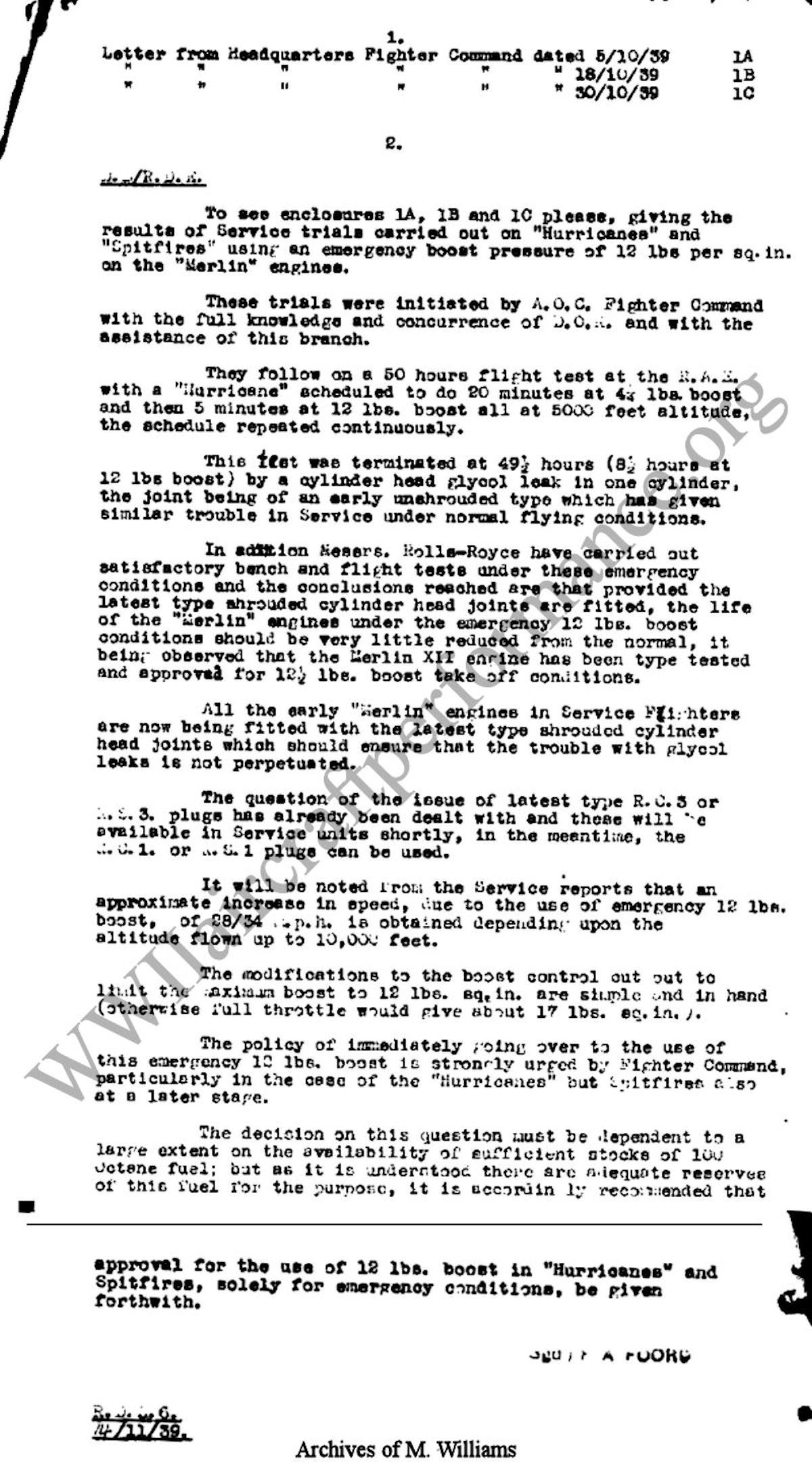
Using overboost doesn't really put much wear on the engine (at least on the Merlin), however, running it with gauges into the "red" does, so track the time that the engine is run in the "red" and engine failure probability should increase disproportionately over time for abused engines.
|
|
#6
06-06-2011, 11:10 PM
|
|||
|
|||
|
Quote:
__________________
Il-2Bugtracker: Feature #200: Missing 100 octane subtypes of Bf 109E and Bf 110C http://www.il2bugtracker.com/issues/200 Il-2Bugtracker: Bug #415: Spitfire Mk I, Ia, and Mk II: Stability and Control http://www.il2bugtracker.com/issues/415 Kurfürst - Your resource site on Bf 109 performance! http://kurfurst.org
|
|
#7
06-07-2011, 04:42 AM
|
|||
|
|||
|
Janes USNF had a similar arrangement for campaigns. Where the carrier had it complement of aircraft. After a mission each aircraft was presented with a list of damage/work that needed done.
You had limited maintenance resources that you had to allocate to fix up the problems. Sometimes you had to take out the less capable aircraft so that the good ones could be used in more important missions later. Every so often new aircraft were brought added. Ordinance also had to be managed in case you ran out special purpose weapons like LGB for pin point targets. Now with the scripting language used in the COD mission builder I wonder if you can write information to a file, so that it can be read for subsequent missions? Cheers
|
|
#9
06-07-2011, 07:28 PM
|
|||
|
|||
|
Quote:
http://forum.1cpublishing.eu/showpos...3&postcount=71 During the BofB RAFFC lost about 1000 Hurricanes and Spitfires from 10 July to 30 October 1940. The average fighter didn't last long enough for engine wear to become a major factor, even if 12lb boost caused major wear, and it didn't. These aircraft were expended at a furious pace and engine wear due to 12lb boost was a very minor issue in the grand scheme of things and I would suspect, that statistically speaking, pilots who "pulled the plug" were more likely to bring their aircraft home than ones who didn't simply because "pulling the plug" denotes situational awareness and the average pilot shot down, never sees his attacker. Last edited by Seadog; 06-07-2011 at 07:43 PM.
|
|
#10
06-07-2011, 08:44 PM
|
||||
|
||||
|
Quote:
If it does not fail the first time, it's life is dramatically shortened in comparison to just running the engine at its rated maximum continuous power of +7lbs. That is why FC dictates the engine is dead-lined, the use of +12lbs entered into the maintenance logs, and the engine must be inspected by a mechanic before it can be returned to service. If your engine fails in an airplane, their is no re-fly button. It is the pilot life on the line and he only has ONE. In accidents resulting from engine failure in flight, if the pilot deviated from published operating standards for the engine, it is a factor in the engine failure in EIGHTY FIVE PERCENT of the engine failures recorded by the FAA. Let that sink in for a moment.
|
|
| Thread Tools | |
| Display Modes | |
|
|




 Linear Mode

