
|
|
|||||||
| IL-2 Sturmovik: Birds of Prey Famous title comes to consoles. |
 |
|
|
Thread Tools | Display Modes |
|
|
|
#1
 02-01-2011, 01:00 AM
|
||||
|
||||

The Bomber Plot Who Escaped To Fly Fighters
Ed Appel flew to England during February, 1944. Before returning to the States, he not only had flown both heavy bomber and fighter planes during WWIl, he had been shot down twice while over enemy territory - once in a B-24 bomber and again in a P-47 fighter. Both times, Ed eluded the Germans who were hunting for him, and made his way back to the Allied ground forces. His B-24 was shot down during his 30th (and final?) mission. He describes the flight this way. On my 30th mission I flew as Command Pilot on Lt. Frazee's crew. It was on the 15th of September, 1944. The target was at Karlshrue, Germany. Just before we reached the IP, we broke into the clear. We had just started our bomb run when we were hit. We took a monstrous hit on the right wing which knocked out the two right engines. The two left engines were still running, but we had no turbos and the fuel cells were ruptured. The rudder cables were cut so we had no use of our rudders. The windshield had caved in from the blast, and gasoline spewed all over. I thought we were going to burn. However, we managed to get the plane turned by using the ailerons but losing altitude fast. We headed westward towards France. With the loss of two engines' power, along with other damage, we couldn't hold altitude. In that case a B-24 is like a falling rock. First we salvoed the bombs and then had the crew throw out anything loose in order to lighten the ship. In minutes we had gone from 24,000' to 10,000' and the front lines were still 100 miles away. It was time to bail out and we did. Our B-24 crew was scattered over miles of Eastern France. When my chute opened, it was only seconds before I hit the ground - in a ploughed field. I shucked my chute and saw two men running towards each other about half a mile away, so I didn't go that way. I hid in a vineyard for awhile. Thinking it wasn't a very good place to hide, I started to get up. I heard "Halt." Coming across the field toward me was a line of German soldiers. They could have shot me easily, but they kept yelling "Halt." I pretended I didn't hear them and kept walking away. I walked into a clump of trees and then ran like a scared rabbit out the other side and down into a slew where I jumped into the water and hid among the slew rushes. They knew I was in there somewhere because they kept walking around the edge of the water. They would get together on one side and fire their burp guns through the weeds, Scared the hell out of me. They all left except for one man. I could see him standing there watching the place. After awhile they all came back and went through the same procedure - shooting and all. Finally they left. I stayed there until dark. Heading West Ed began his westward walk toward the front lines. He traveled mostly at night, hiding in any cover he could find during the day. He had an escape kit with a compass, a map, a hack saw blade and some concentrated rations. He also had his .45. On coming to the Donau River, he used the hack saw to cut a chain that moored a small boat. The boat was on a cable that had a pulley hanging on another cable that ran across the river. Ed was able to pull himself across. He staged a repeat performance at a second river. A third river turned out to be a lake which he could have walked around but ended up sitting in the middle of the lake. Ed Appell had several close calls. In one instance, he carefully entered a barn in which he found a horse. He took the blanket from the horse, stuffed some potatoes in his pockets and started back out just as some German soldiers came by. In another instance, he was sitting in the woods waiting for nightfall when he heard two civilians coming towards him. He drew his .45 and hollered "Halt." They would not stop though I kept hollering. One finally did stop and then the other stopped advancing. One stayed there and the other took off. Ed took off running from the one, and out ran him. After that, he would go up to a house right after dark and knock on the door. Usually the man of the house would answer. Ed would immediately state that he was an American flyer and needed food. He was fortunate. Many times they invited him in to the table. They gave him bread meat and coffee. He would leave his gun on the table, and after eating, would leave and make as many miles as possible so they wouldn't catch him. A few days later, he decided to cross a field in the daylight when he saw a French farmer and his wife at work. Shortening his dramatic story, Ed says, "they hid me in a hayloft along with their son who was also hiding from the Germans. Though he was French, he had been conscripted for duty with the Germans on the Russian front. After being wounded in one leg, he went AWOL and was spending the rest of the war in the hayloft. So the two of us spent about two and a half months right there when the Germans were pushed out and American tanks, trucks and troops came down the road. l was out! Later I learned about the navigator who jumped before we did but did not make it. His chute never opened. Two others of the crew hid out in a farmhouse near Alsace Lorrain for about a month, then decided to get out, joined the French underground, put on civilian clothes and tried to make it through the lines. They were caught and shot as spies. I had talked my friend, Capt Paul Anderson into flying this last mission with me. He ended up doing 9 months in Stalag Luft #1, Barth, Germany. In the summer of 1945 in our home town of Redfield, SD his first words to me were, "You son of a gun. You take me on a trip over Germany, and you dump me out." Back In England While waiting for orders to the US Zone of Interior, Ed decided he would try to hook on with a fighter group. By his own statement, he guessed that he was flak happy. He contacted Dave Shilling of the 56th Fighter Group. Colonel Shilling said, "Sure, come on down." And down he went. That was quite a kick, getting out of bombers and into fighters. Like getting out of a truck and getting on a motorcycle. After checking out in the P-47, I flew 16 dive bombing, strafing and escort missions. My last mission came on 16 April, 1945. I was busily strafing Muhldorf Airdrome, 50 miles east of Munich. I came in on the deck and was shooting into ME-109s sitting on the field. I picked up a lot of ground fire. The engine started running rough and I was losing power. I started to pull up. I shouldn't have done that over the enemy airfield. They really started getting hits. I tried to get over one last hill before bellying in. As I started to clear, the right wing stalled and went down. I cart wheeled across the country side and thought school was out. By some miracle, the plane came to rest right side up. I crawled out and ran until I reached some trees. He traveled at night, as he had done before, stole boats and crossed rivers, got food from a few German homes and eventually reached the front lines where he "surrendered" to US Army troops. Traveling at night toward the west and the front lines, I finally got near the front lines where there was a lot of shooting. One night I heard the shooting move to the east. The next morning I crept out to the edge of the woods and watched the roads. Finally I spotted Weapons Carriers, Tanks and troops that were definitely ours. I came out of the woods with my hands held high. Believe it or not, it was the same outfit I came out with the first time. By the time I got back to Paris, the war was over. I rode on an LST across the ocean with a whole load of ex-POWs.
__________________

|
|
#2
02-01-2011, 01:01 AM
|
||||
|
||||
|
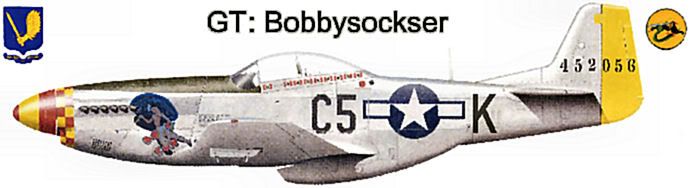
From the nose of his B-24 Liberator commanded by Lt. John French, came those words from F/O Robert Timms of the 700th Bomb Squadron who was watching his entire 445th Bomb Group disintegrate. Wave after wave of FW 190 fighters from the three Sturmgruppen had approached the 445th unmolested and were now driving through the formation, all cannons blazing. In just a few short minutes the Kassel mission was escalating into a full-scale disaster for the 445th. In the opening moments of the battle, frantic radio calls for help went out on the fighter channel.
I saw Pearson's ship to our left blossom with sudden bright flame, then kick over and down, Carlow's ship behind him hurt and distressed, trying to fight off the angry bees. Then it fell like a broken toy. I felt the thud of our own ship being hit hard. Where are our fighters!? Where are our fighters!? Oh, God!!... Even as the bombers were falling, P-51 Mustangs of the 361st Fighter Group were not far away and were heading at full speed for the fearful scenes of destruction over Eisenach. While that day was undoubtedly a black day for the 445th from Tibenham, Norfolk, the same mission ironically was uniquely successful for a single squadron of P-51 Mustang escorts who only the previous day had arrived at their new base in Little Walden, Essex. Ernest Schroder of II./JG 300 had just passed through the bomber formation and registered two kills. Now he was circling in large downward spirals the two B-24s in their death throes. He could see some ten to fifteen large columns of smoke rising through the cloud layer where crashing aircraft had exploded ... Everywhere was burning wreckage. The fields were covered with many white parachutes where American and almost certainly German fliers had come down. I arrived at 100 meters above ground and could clearly see the crewmen who had bailed out running through the fields. Suddenly, diagonally from the front, a yellow-nosed airplane shot towards me, an American fighter unmistakably. The fighters Robert Timms so desperately wanted to see must have arrived very shortly on the scene after the third wave of FW 190s had gone through the bomber formation. They would soon have a very dramatic effect on the 27 September 1944 air battle even if they could not save the American bombers. In the lead bomber Timms heard his nose turret gunner exclaim, "Oh, you sonovabitchin' lovely angels, you... " The 361st Fighter Group had been assigned as one of five fighter groups accompanying the Kassel force on that day. Its component 376th Squadron, known as the "`Yellowjackets" for the bright yellow noses on their P-51s, was destined to make its mark on that day. Forty-five of the group's Mustangs had made their scheduled rendezvous with the bombers of the 14th Combat Wing over Holland before penetrating German air space that day ... but as the Focke Wulf Sturmjager hit the B-24s, the radio headsets came alive with the cries of pilots calling out enemy aircraft. Now Ernst Schroder was immediately in trouble. Both of us opened fire simultaneously with our big caliber weapons. The American immediately scored a hit on my tail. My weapons, on the other hand, failed after a few shots. I began to fly with evasive movements. Schroder believes he escaped with his life because he had come down to 100 meters altitude. The P-51 quickly lost the camouflaged FW-190 against the trees of the forest-covered valley sides over which they were flying. "I landed after minutes of fearful seating at Langensala after a total of ninety minutes flying time. Part of my rudder had been torn away." Meanwhile, Lt. Victor Bocquin leading the 376th FS was able to bring his guns to bear on the first of three Focke Wulfs that he would personally destroy that day. "I caught an FW-190 just before we hit the clouds and began shooting at 300 yards, getting good hits. I followed him into the overcast and lost him, but then saw a chute when I came out and his plane spinning down." Elsewhere in the action, other 376th pilots, no strangers to aerial combat, operating in groups of two or three, were in frenzied pursuit of the FW-190 Sturmbocke. lst Lt. William Beyer, Red Flight leader and Robert R. Volkman, flying his wing, pressed home their attacks. I got on the 190's tail and he did his best to lose me, doing split S's and tight turns. I followed through his maneuvers until he started to climb. I opened fire at about 100 yards getting hits. He popped his canopy and bailed out... With its extra armor and guns, the A-8/R2 Sturmbbock was a very un-maneuverable heavyweight and was totally unsuited for low altitude turning dogfights. Verner Vorberg of II.JG4 was in the fight but made it back to Welzow, south of Berlin. Individual pilots were being wiped out by the escort fighters. Seven Satffel ceased to exit. Five Staffel came away much better off and must have broken off before the Mustangs arrived. On my return to Welzow, a wheel along with its shot up support fell off when I let down my landing gear. I had to land on my belly... Othmar Zehart, one of the most experienced pilots of II.JG4 and Staffelkapitan of 7.JG4 was lost and is still listed missing today. He was one of the few survivors at that stage from Sturmstassel, and in nine Sturm missions had shot down seven American bombers. Amongst the relatively more experienced aces of IV./JG3 the carnage was not so severe. One notable victim was Verner Garth Staffelkapitan 14./JG3 who bailed out of his burning FW 190 and landed uninjured. Karl Dieter Hecker of 15./JG3, who had just registered his fifth Viermont victory, was another who bailed out although badly wounded. A similar fate befell Lt. Ernst Rex who had just shot down his first B-24. In total, some 25 Focke Wulf 190 Sturmbockes were shot down along with four of the bf 109 escorts. Only one P-51 Mustang was lost, a member of Blue Flight; lst Lt. Leo Lamb would not return to England. Gerhard Vivroux would claim him as his l lth victory. On landing, the victorious pilots of the 376th discovered they had destroyed eighteen FW 190s in the air and three on the ground - a 376th record, with Victor Bocquin claiming three and William Beyer five. (During September, Beyer had downed 72-victory German ace Major HIaus Mietusch after a protracted dogfight.) The events of September 27, 1944 mark a watershed in the fortunes of the Jagdwaffe's Sturmgruppen. Clearly capable of pulverizing an unescorted bomber, the average Sturmgruppen pilot was at a terrible disadvantage when faced with aerial combat with the U.S. escort fighters. Wellequipped eager P-51 pilots had a distinct edge. Tactically the Sturmgruppen formation, while providing firepower in mass against the bombers, would become increasingly more difficult to be effective as more U.S. fighter escorts ranged over central Germany. The writing was on the wall after the Kassel mission. This is a perspective from both sides of the battle over Kassel on the ill-fated mission of September 27, 1944. Quoting participants Ernst Schroder of II./JG 300 and F/O Robert TIimms of the 445th Bomb Group, these excerpts appeared in an online account of that epic battle in the skies: Those of the 376th Squadron, 361st Group who were there could no doubt add much to this narrative. On September 27, 1944, the 445th Bomb Group flew a mission to Kassel, Germany with thirty-seven aircraft. There was a solid undercast and navigational errors were made such that a different target was hit (Gottingen) about thirty miles northeast of Kassel. This put the entire group out of the bomber stream: they were on their own. Ten minutes later, about one hundred German fighters jumped the group of bombers. The entire battle took less than five minutes. We lost twenty-five crews and ships at the scene of the tragedy. In addition, two ships crash landed in France, two crashed at Manston, England, and five crashed near our base at Tibenham, England, which means that only three ships returned and landed at our base. During a target escort mission to Kassel, the 376th set an ETO record with claims of 18 E/A destroyed in the air, plus seven damaged, and three destroyed on the ground, plus one damaged. Lt. William R. Beyer became an “Ace in a Day”, claiming five Fw190s destroyed, but Lt. Leo H. Lamb was KIA. The ferocity in which the Fw-190's attacked is evident by their claims of bombers destroyed which of course is not correct. 56 B-24's destroyed and 25 shot out of formation. For fact, we do know that IV.Sturm/JG 3 was the first to attack and had no high cover. I would suspect that their claims of 17 B-24's is correct, as they lost no pilots KIA, but had 5 wounded. They lost 6 aircraft to bomber return fire, and 3 damaged. II.Sturm/JG 4 came second with II.Sturm./JG 300 and the Bf 109 Gruppen coming in at a close 3rd, probably within 30 seconds to a minute of the JG 4 unit. These units probably shot down the stragglers not already shot down by JG 3.
__________________
Last edited by bobbysocks; 02-01-2011 at 01:05 AM.
|
|
#3
02-01-2011, 01:04 AM
|
||||
|
||||
|
A native of Augsburg, Josef ‘Sepp’ Schmauz was 22 when the war started. Having joined the German army, he did not cherish the thought of fighting on the ground. So he quickly applied and was accepted for the Luftwaffe and after training was posted to II Gruppe/Kampfgeschwader 53 (II/KG 53) ‘Legion Condor’ at Lille-Vendeville in northern France in the latter months of 1940. His function was beobachter (observer) in a five-man He 111 crew.
Once deemed suitable for operational flying, ‘Sepp’s’ crew was assigned to 6 Staffel in April 1941 and in the months that followed, they flew 12 missions over he UK against Belfast (probably April 15, 1941), London (three times), Liverpool, Portsmouth, Sheffield (likely May 8, 1941), Brighton, Southampton, Ipswich, Harwich and the bomber airfield at Stradishall in Suffolk (possibly May 11, 1941). Sepp Schmauz, with more than 290 bombing missions over Russia, was withdrawn from operational flying to be an instructor, but following the Allied invasion in Normandy in June 1944, returned to 6/KG 53 to fly limited bombing and re-supply missions over northern France. On August 28, 1944, the Gruppe was recalled to Germany where it was to convert to bombing missions carrying an underslungV-1 ‘doodlebug’. Sepp recalls: “On August 28, 1944, 09:15, our He 111 took off from Rouvres, near Verdun, to fly to Babenhausen. The first contact with fighters, P-51 Mustangs was in the area of Bernkastel at the river Mosel. Our reaction was to fly as low as possible, at about ten metres flying height. “Three of the fighters immediately launched an attack. During the first, our Heinkel was hit in the fuselage. Our radio operator told the pilot, Lt Fritz Will, and myself that two comrades had been wounded by the gunfire. There were several more attacks which also hit our aircraft. “To avoid being shot down and crash we tried to carry out an emergency landing on a field near the village of Hahn. While carrying out this manoeuvre a Mustang, coming from the right, fired into our glazed nose. It was obvious that the pilot wanted to hit the cockpit crew. “Lt Will succeeded in belly-landing our He 111 on the field. I had already opened the pilot’s sliding hatch to make getting out… easier for him. The other members of the crew who were able to escape had left… at the side of the fuselage. “They crept along the furrows away from the plane. The pilots of the enemy fighters acted very fairly because they did not shoot at us. They shot at our Heinkel until it burst into flames. “In the meantime we had reached Hahn which was only about 300 metres away. The villagers who had been running towards us lead us into the village Inn. The landlady helped us and sent for the doctor. “Because of the strain and the concentration during our emergency landing I had not noticed until now that I had been wounded by shell fragments in my right upper arm and the right part of my chest. Our radio operator and the engineer were wounded, too. “Only seven out of our crew of nine had arrived at the inn. Our gunner, who was the last to arrive, told us that Lt will and Ogefr Hermann Deubner had not left the aircraft, so they burnt in the plane. They had probably suffered such severe or even deadly wounds that they were not able to leave the plane. We were deeply shocked by the death of our comrades. “An ambulance took the three of us who were wounded to a hospital in Bernkastel for further medical care. Because of his severe wounds our comrade Ofw Ludwig Römer lost his right leg…”
__________________
|
|
| Thread Tools | |
| Display Modes | |
|
|




 Hybrid Mode
