
|
|
|||||||
| IL-2 Sturmovik: Birds of Prey Famous title comes to consoles. |
|
|
Thread Tools | Display Modes |
|
#10
 11-01-2010, 07:41 PM
|
||||
|
||||

veteran's day is coming up so...
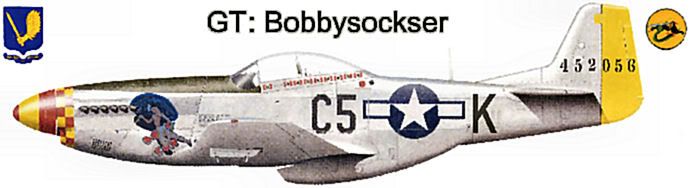
Mark Stepelton Normandy Invasion I was a young Fighter Pilot flying with the famed 357th Fighter Group stationed at Leiston, England. Our main mission was to escort the 8th Air Force Bomber Force on missions deep into Germany. We flew the greatest fighter plane of World War II, the P-51, Mustang. Our performance was outstanding. We had flown many combat missions prior to June 6, 1944, during which time we had saved thousands of lives of Bomber Crews on long combat missions over enemy territory. Our fighter crew losses were serious and we all wondered when the Invasion would take place. Upon returning from a combat mission on June 4, 1944, we were told that our P-51s would be in a grounded condition temporarily. Little did we realize the magnitude of coming events. Our ground crews began painting white stripes on the wings of our Mustangs and even then we didn't realize those stripes would soon be recognized as "D" Day stripes. The purpose was for our ground troops to easily recognize our aircraft as friendly planes. When not flying, our favorite meeting place was the Officers Club, so it was there, at about 9:00 P.M. or 2100 hours military time on June 5th 1944, that an announcement was made that all combat flight officers would report to the Group Briefing Room immediately. Of course, the excitement was tremendous. No previous combat briefing had created this much attention, even our first mission over Berlin, Germany. Identification was required at the Group Briefing Room and one could feel that something tremendously vital to us was about to take place. We were seasoned combat pilots by now and had seen many fine friends lost in combat. We felt confident in our abilities as fighter pilots to succeed in any mission assigned to us. We were called to "attention" as our Fighter Group Leader entered the briefing room. He immediately requested the Intelligence Officer to first brief us about the "Top Secret" aspects about the mission we were about to hear. We were sworn to secrecy. We were not to tell our ground crews or talk to anyone. Phone calls were "off limits." Our Group Commander then made a very terse announcement that we had been assigned to fly cover for the greatest of all combat missions, the "Invasion of Europe" by our combat ground force enroute by sea. This mission would be called "D" Day and to begin during the early hours of June 6, 1944. I well remember a feeling of supreme excitement, similar to the feeling I'm now experiencing as my mind races back to those indescribable events. We were all young men who, a few years before had never dreamed of being given such a vast responsibility. Our assigned mission was to protect the Normandy Beachhead from attack by German Fighters. The ground combat troops would be asked to invade France against seasoned German Troops. Only a few of our ground troops had combat experience and needed to be assured that the only aircraft above them would be friendly. The Group Commander ended the briefing by stating that we should retire soon as possible because a specific mission briefing would be held at our Squadron briefing room about 2:00 AM. How could we possibly sleep with such a tremendous mission soon to be our responsibility? I couldn't sleep. I laid down on my cot, fully dressed in my flight suit and sought the help of our Lord Jesus Christ. I prayed for the safety of the thousands of young men in ships, waiting for the signal to board their landing crafts. I had no thoughts or concerns for my safety, I already had 38 combat missions. I didn't look at my watch when an officer entered our room and quietly told us to report to the Squadron Briefing Room immediately. Now the excitement was beyond description. Only combat pilots were allowed at this briefing. The Squadron Commander (The worlds best) Lt. Col. John Storch of Long Beach, California, gave us individual assignments in specific areas along the Normandy Invasion Areas. We noted that a light rain was falling and the sky was very black, however, all of England was on a "blackout." Due to weather conditions, we would fly to our assigned areas in pairs. My great buddy, Captain Leroy Ruder from Nekoosa, Wisconsin, would be my partner. Of course, you realize that a P-51 Mustang holds only one person, so we would take off in pairs and be on our own from the moment of takeoff. After synchronization of watches, we received our assigned "start engine" time. We raced to our revetments where our planes were parked and sporting a new set of white stripes on the wings. I carefully checked my plane which I had named "Lady Julie." She was no lady. My Crew Chief and Armorer knew that something extremely important was about to happen because we had never taken off at this time of the night. No questions were asked and the only comment made to me by my Crew Chief, as I sat strapped in my Mustang, patting me on my back he said, "take care of yourself." Waiting for "start engine" time always allowed time for reflection of your lost buddies, and fond memories of times back home. I was never afraid of being shot down. Previous "dog" fights had given me self confidence. The sound of Rolls Royce Merlin engines of our P-51s barking as they were energized, jolted me back to realization of the job ahead. Captain Ruder began taxiing to the takeoff runway ahead of me. The nose of the P-51 is so long that it was necessary to "s" turn the aircraft in order to observe the aircraft ahead of you. We finally reached the area of the takeoff runway, turned the aircraft so as to avoid damage to the plane following you and went thru the "takeoff" check. My engine roared to a high pitch, sweet sound found only in the Merlin engine. Rain now was rather severe. No turning back due to bad weather on this mission. Captain Ruder taxied to takeoff position and I joined him on his right side. He motioned to me with a forward motion of his hand and with full throttle we raced down the runway and up into the black night. Captain Ruder turned out over the North Sea and headed southwest toward the greatest event of our history, the "D" Day Normandy Invasion. Captain Ruder was an "Ace" and a very fine fighter pilot. He was one of those pilots who was extremely confident of his capabilities and was not afraid of anything. We timed our approach to arrive over Normandy before dawn. We dropped down from our flight altitude to a very low altitude as we began our patrol. NO GERMAN FIGHTER PILOT WOULD APPROACH THE LANDING INVASION AREA OF OUR RESPONSIBILITY. As dawn slowly arrived, we could see the vast armada of ships heading toward Normandy. A sight that is etched in my memory for all the days of my life. I prayed hard for the safety of our invading troops. I cannot begin to describe the picture before my eyes, so vast and powerful looking. Large Battleships firing toward shore. After about four hours of patrolling, Captain Ruder called me over the radio to state he had been hit by ground fire and was going down. We were not in close formation. He crash landed and died soon thereafter. The loss of my friend, Captain Leroy Ruder was so shocking because it happened so fast and it was beyond his ability to avoid. I now patrolled alone with a very heavy heart. Captain Leroy Ruder, a very brave and experienced pilot, always extremely aggressive against German Fighter pilots, now lost his life during the early phase of "D" Day. He was the only Fighter Pilot in our Fighter Group and the entire 8th Fighter Command to lose his life on "D" Day. Finally, as my fuel became dangerously low, I returned to our base at Leiston, England. I had logged the longest combat flying time of our pilots on the first mission and could barely climb out of my cockpit. The cockpit of a P-51 Mustang is very confining and not a place for anyone who is claustrophobic. I was the last fighter pilot of our Group to arrive back at our home base from that momentous first mission. After debriefing, I went directly to my barracks and slept for two hours. I was awakened by an announcement that we should assemble at the Squadron Briefing room in 45 minutes. I had not undressed and was still in my flight suit. Even though I was extremely tired, the excitement of this great day dept us young pilots living on adrenaline. At the Squadron Briefing, we learned that we would patrol back of the German lines behind the "beachhead" and to destroy anything moving toward the front. About an hour later, we were back in our P-51's for an "Area Support" mission on this great day. We located a train moving toward the invasion area. We circled the train at a very low altitude, knowing that anything moving was the enemy. The engineer had pulled the engine into a tunnel, leaving the passenger cars exposed. While making a circle, our engine noises alerted the German troops who flooded out of the cars into the area next to the cares. We knew what we had to do, so these German combat troops never reached the invasion area. After several hours of patrolling at low altitudes, we returned to our base at Leiston, England. I was totally exhausted as my Crew Chief helped me climb out of my cockpit. Now it was dark and raining. After debriefing, all I could think about was sleep. I had logged this combat mission at 5:25 hours, some what less than my first mission. The combat troops in the invasion area had no place to sleep. This is the first time, I have attempted to write about the most important day of my life which is so deeply etched in my mind. While our job was exciting and dangerous, EVERY AMERICAN OWES GREAT HONOR AND THANKS TO THE VERY BRAVE COMBAT TROOPS WHO HAD THE TREMENDOUS RESPONSIBILITY OF ACTUALLY INVADING INVINCIBLE EUROPE CONTROLLED BY GERMANY UNDER THE MAD MAN, HITLER. WE AMERICANS CANNOT BEGIN TO THANK THOSE TROOPS ENOUGH. JUST VISIT THE AREA ABOVE OMAHA BEACH, WHERE THOUSAND OF AMERICAN SOLDIERS ARE RESTING AND IT WILL TEAR YOUR HEART OUT.
__________________

|
| Thread Tools | |
| Display Modes | |
|
|




 Threaded Mode