
|
|
|||||||
| IL-2 Sturmovik The famous combat flight simulator. |
 |
|
|
Thread Tools | Display Modes |
|
#42
 02-05-2010, 08:33 PM
|
|||
|
|||

Very nice Oleg...I know I will instantly recognize Tower Bridge...Its not necessary to fine tune it any further...The main thing now is how realistically it blends into its surroundings. Combat sims in the past just stuck 3D landmarks onto a blurry city texture and I know you have much bigger plans than this.

|
|
#43
02-05-2010, 08:51 PM
|
||||
|
||||
|
already see this. can't buy me whit this. bad post.
__________________
 Core2Quad 9400 2.66Ghz 45nm - 4x2gb ddr2 800 Kingston = 8GBRAM - XFX Radeon HD 5850 Black Edition 1Gb DDR5 765Mhz/1440steam/ 4.5Gbps- 1/2 Terabyte Wn D 32mb - Mother Assus P5QLE - P&C Silencer 750W - Sentey RJA246 LCD 4 coolers - DVD/RW 20x LG - LCD Samsung P2350n 23" - Edifier C2 2.1+1 waiting for: Il-2: Armée de l’Air; Continuation War; Battle for Moscow; Stalingrad; El Alamein; Sicily; The West Air Campaign; Berlin ZakKandrachoff
|
|
#44
02-05-2010, 08:59 PM
|
|||
|
|||
|
Nice job, as stated above PLEASE let us help you with photos of period flying gear used by the RAF.
Agree that no British RAF pilot would have worn 'ENGLAND' shoulder flashes, country titles were worn by those serving with the RAF/Commonwealth outside of their home country. So, an RCAF officer would wear CANADA titles in the UK but not in Canada. Also, all non-British below officer rank wore 'shoulder eagles' not country titles. 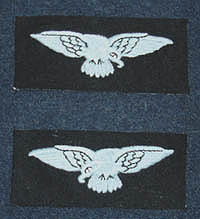 Eagle's head would always point to the wearer's rear. Another thing, you've copied the insignia from a modern RAF uniform. The crowns on the cap badge and wings should be a dome shape, as they were during King George VI's reign, not the heart shape adopted after the coronation of Elizabeth II. WWII-era crowns were like this: 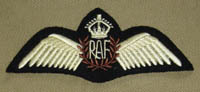 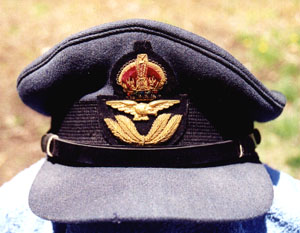 Note the brim of the cap is the same blue-grey material, NOT black leather. There should not be pockets on the sheepskin Irvin flying jacket, and no metal snaps on the sheepskin trousers. BTW, don't recognize this type of flying suit: I can give you pics of the type of suits worn during the BoB. The life jackets pre-war were greenish, guys would later paint over them with yellow so they would be more visible in the Channel. Original Green: 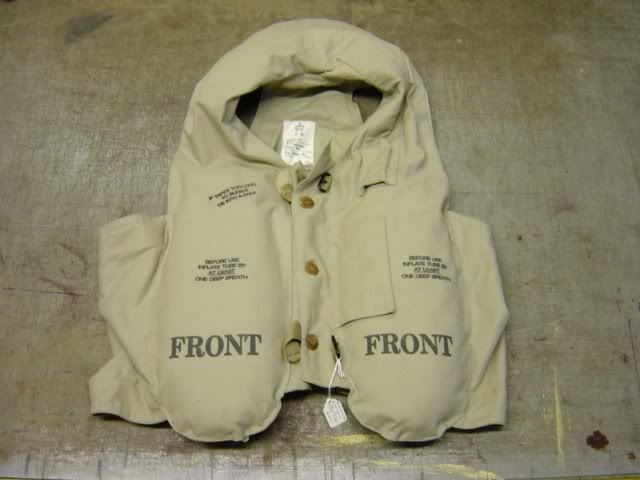 Here is the type of microphone that should be on the Oxygen mask, the one you have didn't appear until the end of the Battle, most guys would have these: 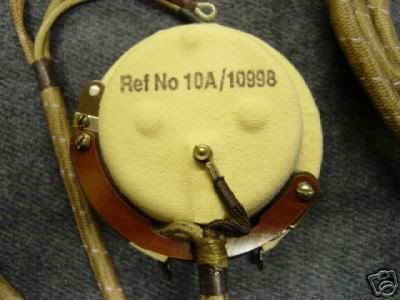 Keep up the great work, and please, let us help! 
Last edited by jocko417; 02-05-2010 at 09:14 PM.
|
|
#46
02-05-2010, 10:12 PM
|
||||
|
||||
|
Very nice up-date! love the detail...in that Life photo I notice that the horse drawn wagons are on the wrong side of the road
  ...all kidding aside, thanks for the up-date Oleg ...all kidding aside, thanks for the up-date Oleg
__________________
 GigaByteBoard...64bit...FX 4300 3.8, G. Skill sniper 1866 32GB, EVGA GTX 660 ti 3gb, Raptor 64mb cache, Planar 120Hz 2ms, CH controls, Tir5
|
|
#47
02-05-2010, 10:44 PM
|
|||
|
|||
|
Quote:
|
|
#48
02-05-2010, 10:48 PM
|
|||
|
|||
|
Very nice. Just some small corrections, if you feel it's important to change.
The belt buckle on the RAF tunic is wrong it should be more like lower pictures. I assume your version is based on the Osprey men at arms picture on page 4. It should be noted that this is not the tunic belt but a webbing belt (the same as on the front cover, but without pistol holster etc.) used in this instance to attach the holder for a bayonet. Also note eagles on shoulders. The peaked cap is also wrong in this instance. Peaked caps were very rarely worn, if ever, except by commissioned officers (pilot Officer and above) except when on special parades or if attached to the camp guard, side caps were the normal head dress. The peaked cap you have shown is for junior ranks (below commissioned Officer, so rarely worn) as it has a black polished leather peak but you have shown it with an Officers cap badge (the crown on the badge is also wrong, as pointed out in a different post). Although the Officers hat is slightly different in shape, to make it look more correct simply change the colour of the peak to same as the top and make sure it is not attached to anyone below the rank of Pilot Officer. Junior ranks peaked cap (note badge)  Commissioned Officers peaked cap (note badge)  The face mask would not be worn except with helmet, there would be no way to attach it or listen to the radio (this isn't Memphis Belle). The colour of the helmet should also be the same as the Irvin jacket or slightly darker but definitely brown rather than black. This is a good example for colour  Although they often look darker if new, or very old.  WWII FLYING HELMET TYPE "B" MASK TYPE "D" and RCAF GOGGLES, 1940 N.B Oxygen tube connector Helmet Mask and Goggles used during the Battle of Britain by RAF crews. The helmet was made by I.Compton & Sons & Webb Ltd . Mk3 RCAF Goggles. 1935 Royal Canadian Air Force Type Introduced around 1935 Mk3 Goggles used curved celluloid lenses fitted into narrow blackened metal frames with velveteen cushions and large leather surrounds intended to protect the wearer from the elements (most RAF fighter aircraft in service in the mid-1930's were still in open cockpits). these were superseded by the Mk4 version as the the Mk3's strap fouled on the earpieces of the type 'B' helmet. the Mk4 is far more likely to have been used during the Battle of Britain. http://www.historicflyingclothing.com/archive.php  Gloves worn, as far as I am aware, would either have been, Gauntlets, generally worn with flying overalls or tunic.   or cream coloured flying gloves used in conjunction with the leather Irvin jacket. ( however normally somewhat dirty) 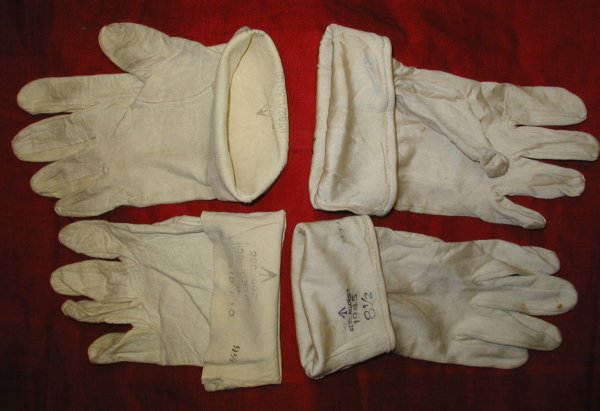 The gloves you show are not flying gloves but COMMISSIONED OFFICERS gloves to be worn on parade or during cold weather normally in conjunction with a great coat or blue tunic, but not for flying. Junior ranks would probably have worn black leather or blue/grey wool gloves. The side cap. RAF pilots were not common Russian peasant soldiers but image concious/stylish Fighter Pilots, caps were worn at an angle, the general rule being as far as gravity and the Station warrant officer (GOD)would allow. The front should be no higher than the distance of the man's thumb tip to the first knuckle joint above the airman's eyebrow. The button holes for the two front brass buttons should not be edged with yellow/gold thread. It should also have a cap badge as in this picture. Junior ranks  Commissioned Officers 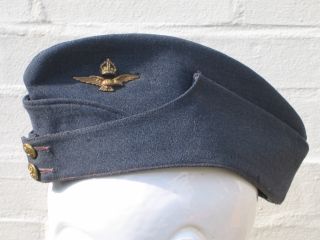  The Sargent pilots uniform: It looks as if you have also given him the rank of a Pilot Officer , there should be no blue and black stripe around the cuff of the sleeve. The Sargent's stripes should also be larger, and the shoulder flash smaller. (note also belt buckle).   Lastly The sheepskin trousers would not have been worn at this stage of the war as Irvin jacket were still a private purchase rather than standard issue (mostly by officers who had the money, but not exclusively) They may have been worn by Aircrew doing duties that exposed them to extreme temperatures but were not used in any quantity until later in the war when they were widely issued to Bomber crews flying at night, at altitude over occupied Europe.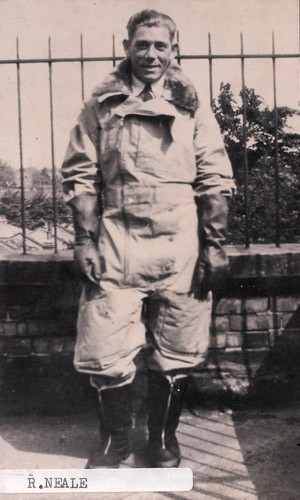 Just realized the aircrew man in flying overalls is supposed to be RAF, what's with the handbag ? I can already hear the shouting and curses as Aircrew try to clamber through the tight confines of an aircraft with that bag catching on every possible object. If it supposed to be a charts/map case then a canvas brief case would have been more usual. I thought originally he was Luftwaffe, see picture of flying overalls (Sidcot, fur collar is detachable )for better representation. Some pilots however wore flying dungarees, more so in hot weather, Air Vice Marshal Keith Park was famous for his white flying dungarees.  N.B Above pic is NOT Sir Keith Park  Links: http://images.google.co.uk/imgres?imgurl=http://www.blitzandpeaces.co.uk/Museum/WW2%2520Militaria/WW2%2520RAF%2520PHOTOS/thumbs/BRITISH%2520RAF%2520WARRANT%2520OFFICERS%2520PEAKE D%2520HAT%2520WITH%2520METAL%2520BADGE%2520FRONT.j pg&imgrefurl=http://www.blitzandpeaces.co.uk/Museum/WW2%2520Militaria/WW2%2520RAF%2520PHOTOS/main.asp&usg=__lJNmPH2cgy1A6UA5uEETNHJrRXA=&h=180& w=180&sz=9&hl=en&start=107&um=1&itbs=1&tbnid=NbbHt ztj5_gvmM:&tbnh=101&tbnw=101&prev=/images%3Fq%3Draf%2Bhats%26ndsp%3D21%26hl%3Den%26cl ient%3Dfirefox-a%26rls%3Dorg.mozilla:en-GB  fficial%26sa%3DN%26start%3D105%26um%3D1 fficial%26sa%3DN%26start%3D105%26um%3D1
Last edited by dAMOCLES; 02-07-2010 at 08:10 AM.
|
|
#50
02-06-2010, 02:44 AM
|
|||
|
|||
|
Quote:
We would also run up enormous mess bills: "Never, in the field of human conflict, has so much been owed by so many to so few" Actually, bragging - 'shooting a line' was frowned upon, and you had to use understatement to explain what happened: "So there I was, going flat out in the old Hurri, diving down on a brace of Heinkels, when one of the rotten Gerry gunners put a hole in my ruddy fuel tank. Most disappointing. I gave him a squirt with the 303s as I went past, but I think I just knocked a bit of paint off. Anyway, the old girl was making unpleasant noises, and it started to get a bit warm, what with the flames licking around the rudder pedals, so I decided it was time to make a swift exit. Next think I knew, I was hanging from the brolly, watching the Hurri go down. She landed in some poor farmer's field, and left a bit of a hole. I came down with a bump, but got away with nothing but a bruised rear. Some local turned up on a horse and cart, and gave me a lift back to base. Anyway, enough of my troubles, who's round is it?"
|
|
| Thread Tools | |
| Display Modes | |
|
|




 Linear Mode

